
the Creative Commons Attribution 4.0 License.
the Creative Commons Attribution 4.0 License.
 | 18 Aug 2026
Bats of a remote island: integrated genetic and bioacoustics monitoring confirms species occurrence in Flores (Azores, Portugal)
Ana Rainho

Cátia S. Estácio
Carla G. Silva
Sofia I. Gabriel
Island ecosystems often harbour unique and vulnerable species, yet many remain poorly documented. In the Azores archipelago, two extant bat species are known to occur: the endemic Nyctalus azoreum and the Macaronesian endemic Pipistrellus maderensis. On Flores Island, part of the remote western group, only unidentified pipistrelle bats had previously been recorded. Here, we combined acoustic monitoring and genetic analysis to assess the occurrence, identity, and ecological patterns of bats on Flores. A pipistrelle specimen was genetically analysed, confirming its identity as P. maderensis and providing the first publicly available genetic reference for the Azores. Acoustic surveys at ten sites detected both species. Pipistrellus maderensis occurred across the island and accounted for 99.6 % of recorded bat passes. Nyctalus azoreum was confirmed for the first time on the island but showed very low activity and was detected only at a few sites in the central and southern parts of Flores. Activity patterns were consistent with nocturnal foraging, with no diurnal activity recorded during the study period. The detection of N. azoreum at previously sampled sites suggests that earlier non-detections may reflect low detectability rather than true absence. These findings improve knowledge of bat distribution in the Azores and highlight the importance of continued monitoring and conservation of small island bat populations.
- Article
(1490 KB) - Full-text XML
- BibTeX
- EndNote


Islands are widely recognised as natural laboratories for studying colonisation, dispersal, and species persistence because their biotas are often shaped by isolation and limited connectivity. These processes are particularly evident on oceanic islands, where communities are assembled largely through rare long-distance dispersal events (Whittaker and Fernández-Palacios, 2007; Losos and Ricklefs, 2009). Mammals are generally underrepresented on oceanic islands because large expanses of ocean act as strong barriers to dispersal, although bats are notable exceptions due to their ability to cross large distances over open water (Castella et al., 2000; Whittaker and Fernández-Palacios, 2007; Losos and Ricklefs, 2009). As a result, island mammal faunas typically consist of only a few bat species, many of which evolve in isolation and become endemic to individual islands or archipelagos (Conenna et al., 2017). At the same time, island bat populations are often small and cryptic, and incomplete monitoring can leave uncertainty about species distributions even in relatively well-studied archipelagos (Conenna et al., 2017). Their restricted distributions, small population sizes, and vulnerability to habitat alteration, invasive species, and stochastic events make island bats of particular conservation concern (Frick et al., 2020; Borkin et al., 2023; Castro-Fernandes et al., 2025; Ibouroi et al., 2025). Understanding the occurrence and ecological interactions of species in remote islands therefore contributes to broader questions about dispersal, colonisation, and persistence in isolated ecosystems (Losos and Ricklefs, 2009).
The Azores archipelago currently hosts two confirmed extant bat species: the Azorean bat (Nyctalus azoreum), an endemic species restricted to the Azores (Palmeirim, 1991), and the Madeiran pipistrelle (Pipistrellus maderensis), a Macaronesian endemic occurring in Madeira, the Canary Islands, and the Azores (Trujillo and Gonzalez, 2011). Nyctalus azoreum has been confirmed on seven of the nine islands, whereas P. maderensis has been genetically confirmed in Santa Maria and has been assumed to occur on other islands where pipistrelle bats have been detected acoustically (Rainho et al., 2002; Rainho, 2021). Both species appear to be synanthropic nocturnal foragers, although N. azoreum has also been observed foraging during daylight hours (Rainho, 2021; Speakman and Webb, 1993).
The western group of the Azores, composed of the small islands of Flores and Corvo, represents the most remote part of the archipelago. Previous surveys and long-term monitoring suggested that these islands were inhabited only by pipistrelle bats (Rainho, 2021; Rainho et al., 2002; Skiba, 1996). However, recent observations of bats flying during the day on Flores Island, together with the recovery of a dead pipistrelle bat, have raised questions about the presence and status of both bat species on this remote island.
Here we combine acoustic monitoring and mitochondrial DNA analysis to evaluate the status of bats on Flores Island. Specifically, we aim to (1) assess whether N. azoreum occurs on Flores Island, (2) confirm the taxonomic identity of pipistrelle bats present on the island using genetic data, and (3) describe the spatial distribution and activity patterns of both species based on acoustic detections. Clarifying the occurrence and ecological patterns of these species contributes to a better understanding of bat distribution within the Azorean archipelago and provides a basis for future ecological and conservation studies in this remote island system.
2.1 Study area
The Azores is a remote volcanic archipelago in the North Atlantic (36–39° N, 24–31° W), situated about 1400 km west of mainland Portugal (Fig. 1) and 2200 km east of Newfoundland. It consists of nine main islands, grouped into western (Flores and Corvo), central (Terceira, Faial, Pico, São Jorge, and Graciosa), and eastern (São Miguel and Santa Maria) regions, near the meeting point of the American, Eurasian, and African tectonic plates.
Flores is the westernmost island of the Azores archipelago, covering approximately 141 km2. Its topography is highly rugged, featuring numerous volcanic craters that have transformed into lakes. The highest point, Morro Alto, reaches 915 m. Under natural conditions, the island would be largely covered by Macaronesian laurel forest and native montane shrublands, although much of this vegetation has been replaced by pastures and plantations of Japanese cedar (Cryptomeria japonica) (Fernández-Palacios et al., 2011; Elias et al., 2016). Flores experiences a humid subtropical climate, characterized by mild temperatures year-round and high precipitation levels.
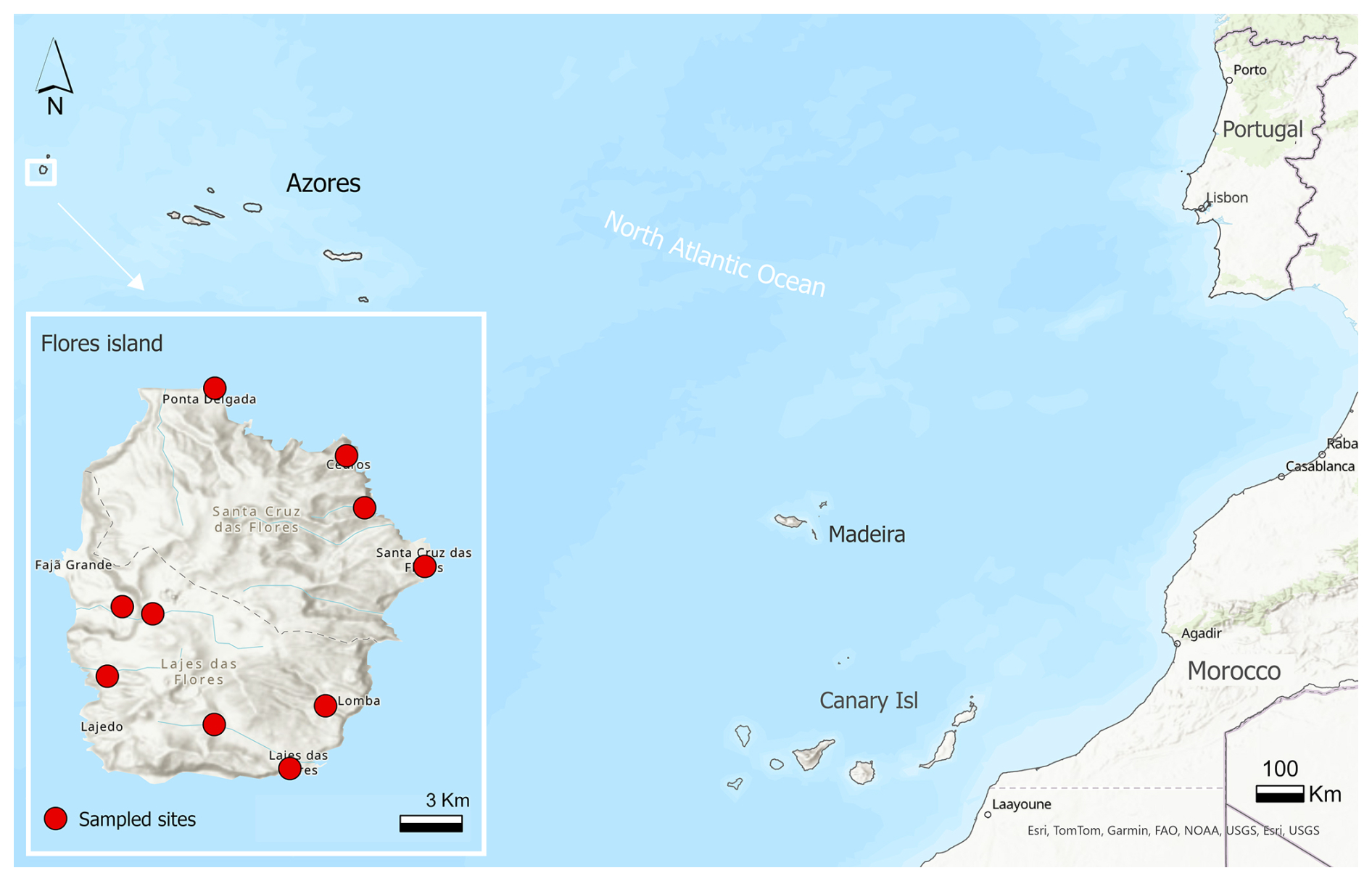
Figure 1Location of the Azores archipelago and Flores Island in the context of Western Europe, Africa, and the Canary and Madeira archipelagos. The inset shows the acoustically sampled sites on Flores Island. Sources: Esri, TomTom, Garmin, FAO, NOAA, USGS.
2.2 Phylogenetic analyses
A dead bat specimen, likely predated by a domestic cat, was recovered by a nature conservation ranger in August 2024 at Fazenda, Flores Island (39°23′21.2′′ N, 31°09′54.1′′ W). No attempts were made to capture additional bats during the study, and genetic analyses therefore relied exclusively on this specimen. A small wing puncture (3 mm diameter) was excised and stored in 96 % ethanol and later used for DNA extraction. The specimen was made available for this study under permit issued by the Direção Regional do Ambiente e Ação Climática (DRAAC), Secretaria Regional do Ambiente e Ação Climática (SRAAC), Região Autónoma dos Açores. In the lab, genomic DNA was isolated using the E.Z.N.A Tissue DNA Kit (Omega Bio-Tek, Norcross, USA), following the manufacturer's instructions. A fragment of the cytochrome b (cytb) gene was amplified by PCR (Polymerase Chain Reaction) following the protocol used by Nóbrega et al. (2023), using the primer pair Molcit-F (Ibáñez et al., 2006) and MVZ-16 (Smith and Patton, 2008). Amplification of the cytb fragment was carried out in a total volume of 20 µL, comprising 10 µL of Taq 2 × Master Mix with 0.2 mM MgCl2 (VWR, Leuven, Belgium), 6.8 µL of molecular grade water, 0.6 µL of each primer (at 10 µM), and 2 µL of template DNA. The PCR cycling conditions were according to Ibáñez et al. (2006), consisting of initial denaturation at 94 °C for 4 min, followed by 35 cycles with denaturation at 94 °C for 60 s, annealing at 50 °C for 30 s and extension at 72 °C for 90 s, and a final extension step at 72 °C for 10 min. The success of the PCR reaction was confirmed by electrophoresis in a 1 % agarose gel, followed by purification with ExoSAP-IT (ThermoFisher Scientific). The obtained PCR product was commercially sequenced at STABVIDA using both primers on an ABI PrismTM 3730xl DNA sequencer. The resulting sequence was visually inspected and aligned in Sequencher v4.1.4 with 32 published cytb sequences retrieved from GenBank. Although P. maderensis has previously been genetically confirmed from Santa Maria (Trujillo and Gonzalez, 2011), the corresponding sequence is not publicly available in GenBank and therefore could not be included in the phylogenetic analyses. Due to differences in sequence length, in order to maximize the geographical coverage of the analysis, the cytb alignment was cut to 465 bp to include sequences of P. maderensis from the neighbouring archipelagos of Madeira (Madeira Island: KC520770–KC520774, Jesus et al., 2013, and Porto Santo Island: OQ260001–QC290006, Nóbrega et al., 2023) and the Canary Islands (AJ426610–AJ426618, AJ426632, Pestano et al., 2003), sequences of N. azoreum from the Azores islands (DQ887587–DQ887595, Salgueiro et al., 2008), and sequences of Pipistrellus kuhlii from Morocco (KM252761, Benda et al., 2015), Libya (KM252774, Benda et al., 2015), the Canary Islands (AJ426607, AJ426609, Pestano et al., 2003), Italy (KU058655, Locatelli et al., 2016), Greece (KM252762, Benda et al., 2015), Switzerland (OQ885408, Ruedi et al., 2023), Macedonia (AJ504444, Stadelmann et al., 2004), and Iran (AJ504445, Stadelmann et al., 2004).
The nexus sequence alignment file was generated by DnaSP v6.12.03 and used as an input file for PopART 1.7 to build a median-joining haplotype network (Bandelt et al., 1999), using epsilon=0 as a default parameter. Colouring of haplotypes represents the region of origin of cytb DNA sequences.
2.3 Acoustic surveys
Bats were acoustically sampled between 16 and 19 September 2024, at 10 sites distributed across the island (Fig. 1). Sampling sites were selected from the long-term bat monitoring network established by the DRAAC in 2012, originally designed to represent the main habitat types on the island while ensuring safe night-time accessibility for hand-held detector surveys. Because only 12 recording devices were available, we selected approximately half of the monitoring sites, aiming for broad spatial coverage while prioritising sites where local park rangers had reported higher bat activity. Two remote sites in the northwestern part of the island could not be surveyed because vehicle access was not possible, and two additional sites in the centre of the island were later excluded because the recording devices malfunctioned, likely as a result of the persistent heavy rainfall experienced during the sampling period. Few of the sampling sites correspond to locations previously surveyed by Rainho et al. (2002), allowing a qualitative comparison of species occurrence through time. However, only data collected during the 2024 survey were included in the statistical analyses.
For the habitat analyses, sampling sites were classified as either stream or urban. Although both categories encompassed considerable variation in local habitat characteristics, including vegetation structure and degree of urbanisation, this broad classification was considered the most appropriate given the limited number of sampling sites.
Echolocation calls were recorded using autonomous acoustic recording devices (AudioMoth v1.1.0, Open Acoustic Devices) mounted on tree trunks or isolated poles at approximately 1.8 m in height. The devices were configured with a sampling rate of 192 kHz and a gain of 30.6 dB (medium setting). Sampling followed a cyclical pattern, with 4 min and 30 s of recording followed by a 30 s pause, over consecutive 24 h periods. Because sampling was limited to a short period in September, results should be interpreted as a snapshot of bat occurrence and activity.
All recordings were automatically filtered using sound analysis software (Kaleidoscope Pro v5.4.2, Wildlife Acoustics) to discard files without bat calls. Retained files were visually inspected using BatSound PRO software (v4.7, Pettersson Elektronic AB), and call characteristics were extracted from spectrograms and oscillograms using the cursor. Echolocation calls of Nyctalus azoreum and Pipistrellus sp. in Azores show similar but non-overlapping frequency ranges (Rainho et al., 2002), allowing reliable species identification based on simple acoustic parameters. In particular, N. azoreum calls show lower peak frequencies (32.1 ± 3.0 kHz) and end frequencies (30.9 ± 2.8 kHz), whereas Pipistrellus calls show higher peak frequencies (45.3 ± 1.7 kHz) and end frequencies (44.2 ± 1.1 kHz). Bat activity was quantified as the number of “bat passes” defined as at least two sequential, recognizable echolocation pulses within a recording.
2.4 Numerical analysis
Differences in habitat use between species were tested in R v4.6.0 (R Core Team, 2020) using a negative binomial generalized linear mixed model (GLMM) fitted with the package glmmTMB (Ruedi et al., 2023), with the number of bat passes per night as the response variable, species, habitat, and their interaction as fixed effects, and sampling site included as a random intercept to account for the non-independence of repeated 24 h sampling periods at each sampling site.
The collected specimen was a dark brown adult individual (forearm: 32.4 mm). Tears in the wing membranes and lower abdomen, along with contextual information gathered on site, suggest it was likely predated by a domestic cat. The specimen has been deposited in the Museu Nacional de História Natural e da Ciência (MNHNC), Lisbon, Portugal under the number MNHNC:MB01:006704.
3.1 Phylogenetic analyses
The obtained mtDNA sequence encompassed 814 bp of the cytochrome b. When submitted the sequence to Nucleotide BLAST web tool, the highest level of sequence identity (98.8 %) was obtained with P. maderensis sequences from the Madeira archipelago. The sequence was submitted to GenBank under the Accession Number PZ699694. The generated haplotype network places the Flores Pipistrellus specimen within the Pipistrellus maderensis cluster and more closely associated with haplotypes from Madeira and Porto Santo islands. The Flores sequence represents a unique haplotype, separated by six mutational steps from the shared Madeira/Porto Santo haplotype group. On the other hand, the closest Canarian haplotype is more distantly connected within the network, 10 mutational steps away from the Flores Pipistrellus sequence (Fig. 2). This analysis genetically confirms the occurrence of P. maderensis in the Azorean archipelago.
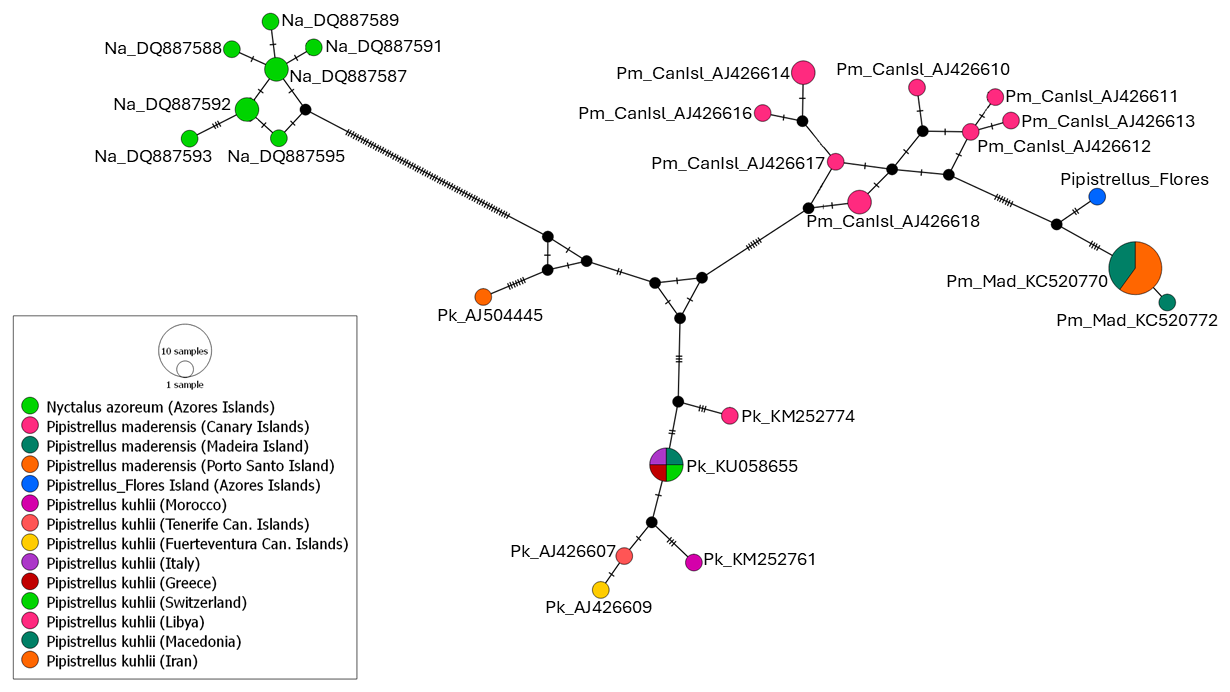
Figure 2Median-joining haplotype network inferred from 465 bp of the mitochondrial cytochrome b region of Macaronesian populations of Pipistrellus maderensis, Azorean populations of Nyctalus azoreum and multiple representatives of Pipistrellus kuhlii from Europe, Northern Africa and the Middle East. Each circle represents a unique haplotype coloured according to the regional origin of the sequences, with circle size being proportional to the number of redundant sequences included. The lines (hatch marks) on the branches represent the number of mutated positions between haplotypes. Black circles represent hypothetical non-sampled haplotypes.
3.2 Distribution and relative frequency
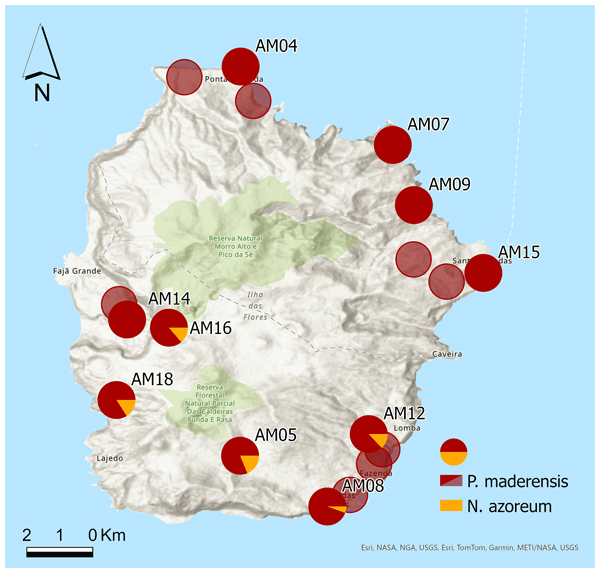
Out of a total of 5760 recordings (4.5 min files) collected during the sampling period, 296 files (4.7 %) contained bat activity, with a total of 3862 bat passes recorded. Of these, 99.6 % were classified as emitted by P. maderensis, while only 0.4 % were attributed to N. azoreum. Pipistrellus maderensis was recorded at all sampled sites, confirming its widespread occurrence across the island. During the sampling period, it exhibited particularly high activity in the northern region of the island (Fig. 3). In contrast, N. azoreum appeared to be much rarer, even in the central-southern region of the island where it was detected, with a considerably lower number of recordings compared to P. maderensis.
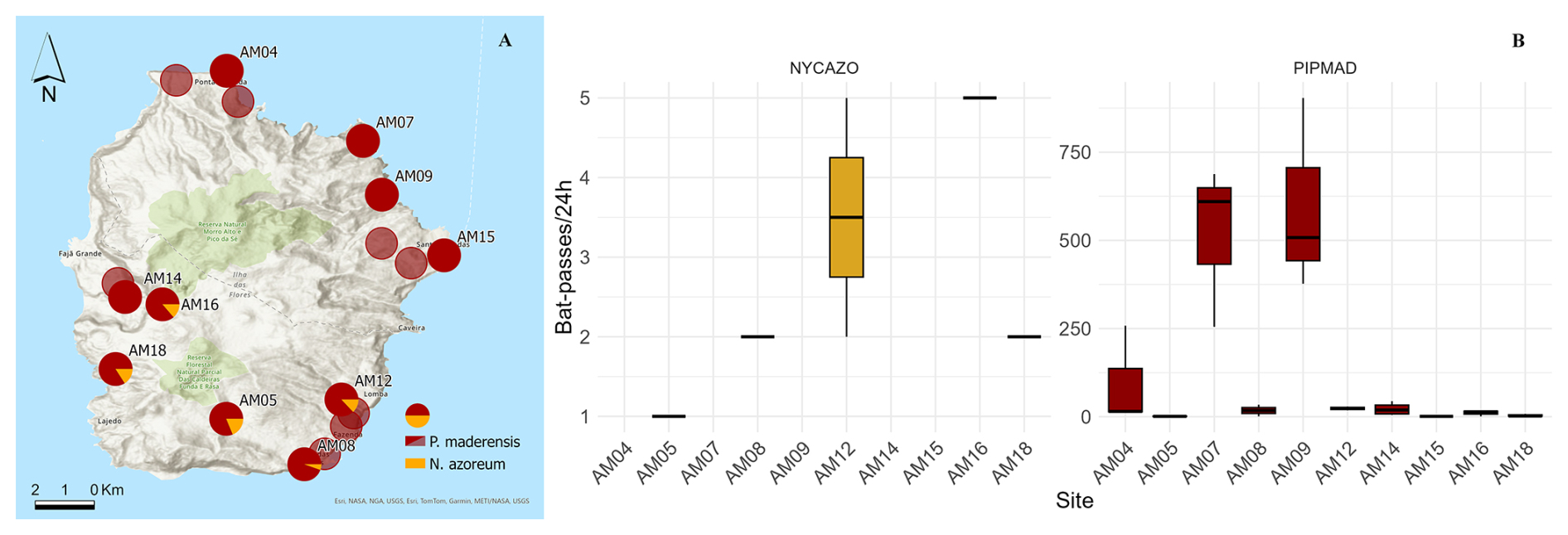
Figure 3Relative activity of Pipistrellus maderensis (PIPMAD) and Nyctalus azoreum (NYCAZO) across sampling sites on Flores Island. (A) Pie charts indicate the relative activity of both species in this study. Additional pie charts shown with reduced opacity correspond to historical surveys by Rainho et al. (2002), where only P. maderensis was detected. These historical data are shown for comparison only and were not included in any analyses presented in this study. (B) Number of bat passes recorded per 24 h sampling period at each site on sampling dates with detections; sampling periods with no detections of a given species are not represented. Notice the different scale of the graphs of the two species and the particularly high activity of P. maderensis along the northern coast of the island (sites AM04, AM07, and AM09). Sources: Esri, NASA, NGA, USGS, TomTom, Garmin, METI/NASA.
3.3 Diel activity
All bat calls were recorded between sunset (20:06) and sunrise (07:47), in Azores Summer Time (AZOST; UTC+0). Both species were active throughout the night, with activity tapering off in the hours before dawn (Fig. 4). The earliest P. maderensis was recorded at 20:07 and the latest at 07:30, while N. azoreum activity spanned from 20:23 to 05:40.
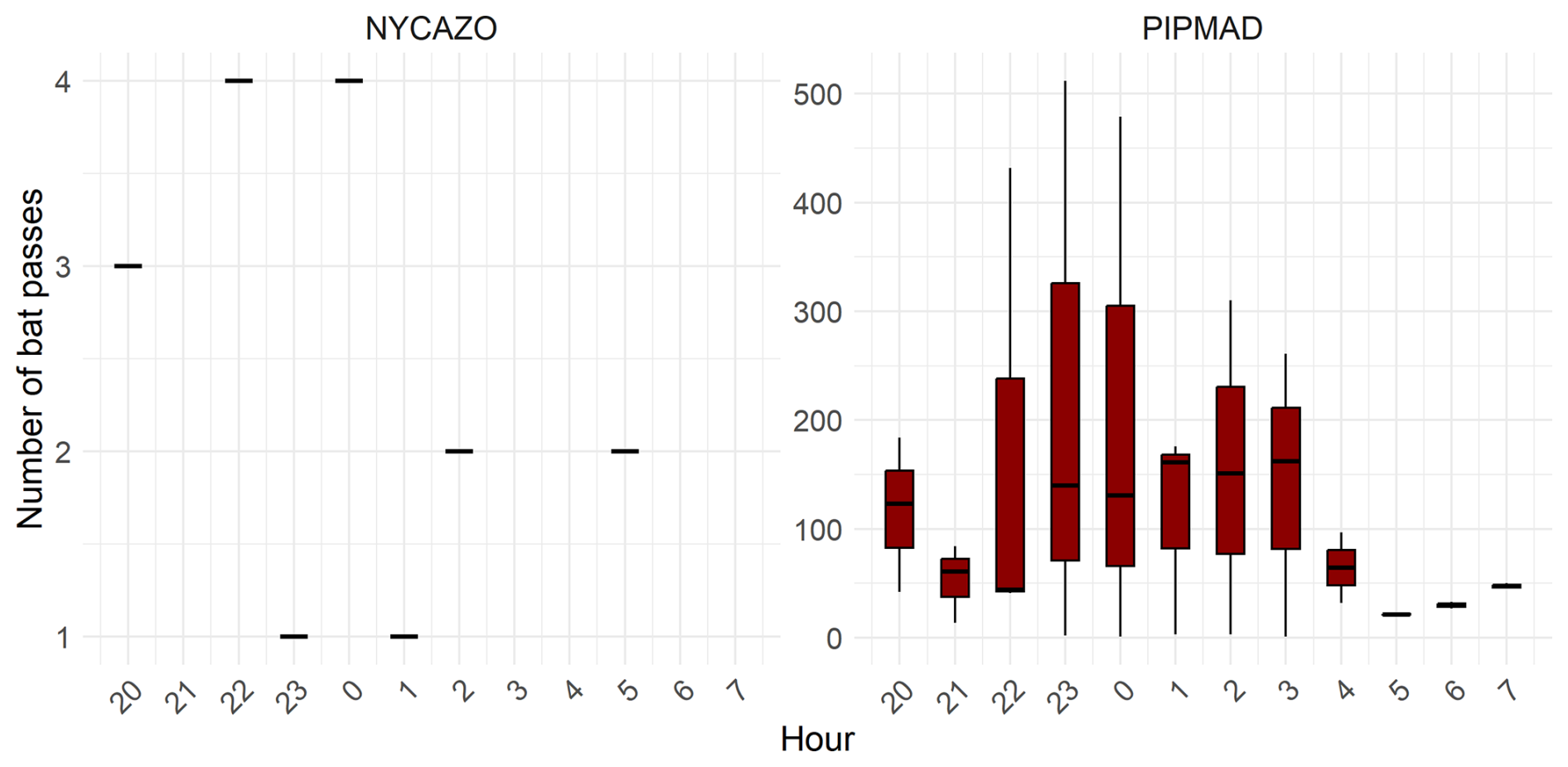
Figure 4P. maderensis (PIPMAD) and N. azoreum (NYCAZO) activity throughout the night in mid-September 2024. Boxplots represent the distribution of the number of bat passes recorded within each hourly interval on sampling dates with detections; hours with no detections are not represented. Notice the different scale of the graphs of the two species. No daytime activity was recorded.
3.4 Habitat use
Bat activity varied widely among sampling units, particularly for P. maderensis in urban habitats, where nightly bat-pass counts showed both high values and high variability (Fig. 5). In the negative binomial mixed model including site as a random effect, the effect of species on bat activity was marginal (z=1.94, p=0.053), whereas habitat (, p=0.658) and the species × habitat interaction (, p=0.693) were not significant, indicating no detectable differences in activity between habitats.
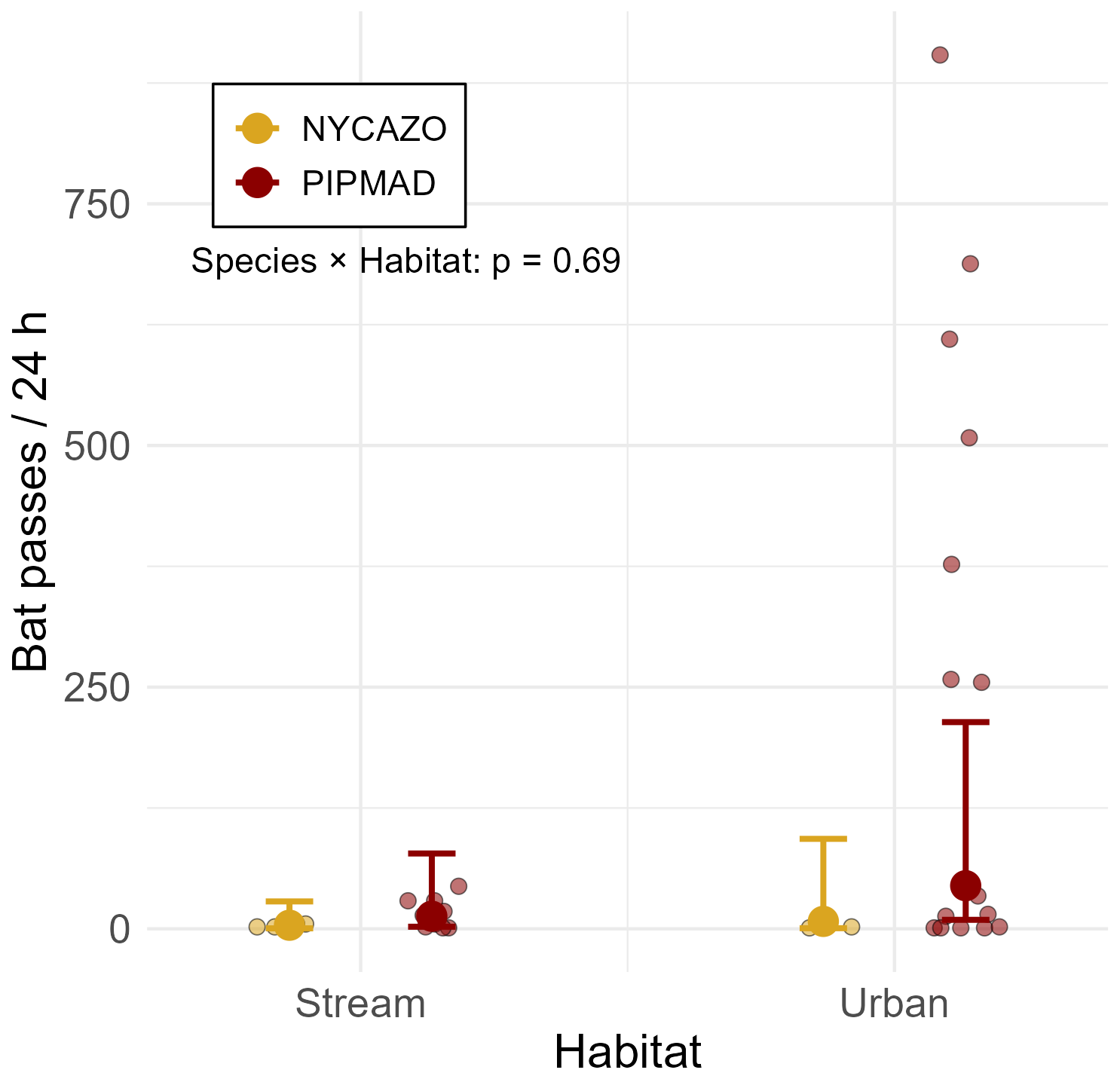
Figure 5Bat activity in stream and urban habitats on Flores Island. Points represent nightly bat-pass counts recorded at acoustic sampling sites (jittered horizontally for visibility). Larger points and error bars show predicted mean activity (±95 % confidence intervals) for each species estimated from a negative binomial generalized linear mixed model including habitat, species, and their interaction as fixed effects and site as a random effect.
Island ecosystems frequently host small and isolated vertebrate populations whose distribution and ecological characteristics remain incompletely documented, particularly when monitoring effort is limited or detection probability is low (Whittaker and Fernández-Palacios, 2007; Conenna et al., 2017). Such knowledge gaps are especially relevant for bats, whose cryptic behaviour and mobility often complicate detection in remote island systems (Fleming and Racey, 2010). In this study, we combined acoustic monitoring and mitochondrial DNA analysis to determine the occurrence and activity patterns of bats on Flores Island, one of the most remote islands of the Azores archipelago. Our results acoustically confirm the presence of N. azoreum on Flores for the first time and genetically verify that pipistrelle bats occurring on the island belong to P. maderensis.
The detection of N. azoreum on Flores is noteworthy because previous surveys and long-term monitoring had failed to record the species on the island (Rainho et al., 2002; Rainho, 2021; Skiba, 1996). Its presence at sites that had previously been surveyed suggests that earlier non-detections likely reflect low detectability and lower sampling effort rather than true absence. This interpretation should, however, be considered in light of methodological differences among studies. Previous surveys relied primarily on short-duration surveys using hand-held bat detectors, whereas the present study employed autonomous acoustic recorders operating continuously over at least two consecutive days at each site, substantially increasing sampling effort and the probability of detecting rare species. Although the present survey was conducted slightly later in the activity season (September) than the surveys of Rainho et al. (2002) (late July–early August), both studies were undertaken during the summer period, suggesting that seasonal differences are unlikely to fully explain the contrasting results. Small island bat populations may occur at low densities or show spatially restricted activity patterns, further reducing encounter rates during short acoustic surveys. These detections therefore expand the known distribution of N. azoreum within the Azorean archipelago and confirm its presence in the western group of islands.
The dominance of P. maderensis across all sampling sites indicates that it is currently the most widespread and acoustically active bat species on Flores. This widespread occurrence is consistent with previous observations (Rainho, 2021). Despite its small size and limited flight power, P. maderensis has demonstrated remarkable dispersal capabilities, successfully colonizing most of the Macaronesian archipelagos and establishing populations even on small, isolated islands such as Porto Santo and Corvo (Nóbrega et al., 2023; Rainho, 2021). Further surveys would be valuable to investigate its presence on the few Azorean islands where it has not yet been confirmed, namely São Miguel, Terceira, and Faial (Rainho, 2021).
Although activity of P. maderensis was sometimes high in urban areas, the statistical analysis did not detect significant differences in activity between habitats or between species across habitats. These results suggest that both species may use a range of environments on Flores, although the very low number of N. azoreum detections limits inference about its habitat use. Previous surveys on Flores also reported higher P. maderensis activity in urban and forest habitats (Rainho et al., 2002), while studies from Madeira and Porto Santo have associated the species with native shrublands and forests, croplands, and areas close to water (Ferreira et al., 2022; Nóbrega et al., 2023). Although no significant habitat differences were detected in the present study, the high variability in activity among sites indicates that further sampling will be needed to evaluate habitat associations more robustly.
While both species can occur in the same areas (Rainho, 2021), N. azoreum has been observed foraging both during the day and at night (Moore, 1975; Speakman and Webb, 1993), whereas P. maderensis appears to be strictly nocturnal, although this remains unverified in the Azores. Such differences in activity patterns may contribute to reducing direct competition. However, the mechanisms allowing these species to coexist remain poorly understood. In particular, studies examining diet and prey availability, vertical stratification, and other aspects of resource use (Gonçalves et al., 2024; Williams et al., 2009; Rainho et al., 2023; Rainho and Palmeirim, 2017) would help clarify how environmental changes may affect the persistence of these small island bat populations.
The mitochondrial DNA sequence obtained from the specimen collected on Flores confirms that the pipistrelle bats occurring on the island belong to P. maderensis. The specimen analysed here constitutes the first genetically identified P. maderensis from the Azores with its sequence published in a public database (GenBank), providing the first publicly available genetic confirmation of the species in the archipelago. Previous detections of pipistrelle bats in the Azores were largely based on acoustic observations, and genetic confirmation of the species has been limited to Santa Maria (Trujillo and Gonzalez, 2011), with no sequence published in public databases. In the haplotype network, the Flores sequence falls within the P. maderensis cluster and appears most closely related to haplotypes from Madeira and Porto Santo. Although only a single sequence was obtained from Flores, its distinct haplotype and intermediate position between the Canary Islands and Madeira/Porto Santo clusters suggests either colonisation from the Madeira region or shared ancestry followed by local differentiation in the Azores. This sequence provides an initial genetic reference for Azorean populations and establishes a baseline for future studies examining population structure and connectivity and the colonisation history of P. maderensis in Macaronesia.
Given the isolation of Flores, the westernmost island of the Azores archipelago, previous evidence of substantial genetic structuring among N. azoreum populations, with haplotypes often restricted to individual islands and limited inter-island gene flow (Salgueiro et al., 2004, 2007), suggests that the small population on Flores may also experience limited connectivity with the remaining islands. Future surveys should also reassess the occurrence of N. azoreum on neighbouring Corvo Island using passive acoustic monitoring, as previous surveys relied on short-duration hand-held detector surveys and may have underestimated the occurrence of rare species.
The confirmation of N. azoreum and P. maderensis on Flores reinforces the importance of the Azorean archipelago in supporting endemic and regionally restricted bat species. However, the apparent rarity of one species on islands where the other is common raises questions about long-term coexistence and potential vulnerability to local extinction (Lande, 1993; Courchamp et al., 1999, 2008). The small size and isolation of these island populations underscore the importance of continued monitoring and targeted conservation strategies (Conenna et al., 2017; Frick et al., 2020; Jones et al., 2010). Notably, the only P. maderensis specimen collected in this study was likely predated by a domestic cat, illustrating the potential threat posed by introduced predators on oceanic islands (Welch and Leppanen, 2017; Oedin et al., 2021; Rainho et al., 2022; Rocha, 2015). Continued research on the ecology and population connectivity of Azorean bats will be important for understanding how insular bat communities persist in small and isolated oceanic archipelagos.
The data supporting the findings of this study are available at Zenodo DOI: https://doi.org/10.5281/zenodo.21396441 (Rainho, 2026).
Conceptualization: AR; Data curation: AR, SIG; Formal analysis: AR, SIG; Investigation: AR, SIG; Methodology: AR; Project administration: AR; Resources: AR, CSE, CGS, SIG; Visualization: AR, SIG; Writing (original draft preparation): AR, SIG; Writing (review and editing): AR, CSE, CGS, SIG.
The contact author has declared that none of the authors has any competing interests.
Publisher's note: Copernicus Publications remains neutral with regard to jurisdictional claims made in the text, published maps, institutional affiliations, or any other geographical representation in this paper. The authors bear the ultimate responsibility for providing appropriate place names. Views expressed in the text are those of the authors and do not necessarily reflect the views of the publisher.
ChatGPT was used to assist with language editing and the development of R code for figure preparation.
This study's fieldwork has been supported by Fundação para a Ciência e a Tecnologia through structural funding awarded to cE3c (https://doi.org/10.54499/UID/00329/2025). The manuscript was prepared in part while AR was funded by ERC-ABIDE (CoG ID 101043231).
This paper was edited by Ricardo Rocha and reviewed by Emiliano Mori and one anonymous referee.
Bandelt, H. J., Forster, P., and Röhl, A.: Median-joining networks for inferring intraspecific phylogenies, Mol. Biol. Evol., 16, 37–48, https://doi.org/10.1093/oxfordjournals.molbev.a026036, 1999.
Benda, P., Andriollo, T., and Ruedi, M.: Systematic position and taxonomy of Pipistrellus deserti (Chiroptera: Vespertilionidae), Mammalia, 79, 419–438, https://doi.org/10.1515/mammalia-2014-0024, 2015.
Borkin, K. M., Easton, L., and Bridgman, L.: Bats attacked by companion and feral cats: evidence from indigenous forest and rural landscapes in New Zealand, New Zeal. J. Zool., 50, 425–432, https://doi.org/10.1080/03014223.2022.2098782, 2023.
Castella, V., Ruedi, M., Excoffier, L., Ibáñez, C., Arlettaz, R., and Hausser, J.: Is the Gibraltar Strait a barrier to gene flow for the bat Myotis myotis (Chiroptera: Vespertilionidae)?, Mol. Ecol., 9, 1761–1772, https://doi.org/10.1046/j.1365-294x.2000.01069.x, 2000.
Castro-Fernandes, A. S., Araújo-Fernandes, A. C., Guedes, P., Cassari, J., Mata, V. A., Yoh, N., Rocha, R., and Palmeirim, A. F.: Responses of insectivorous bats to different types of land-use in an endemic-rich island in Central West Africa, Biol. Conserv., 302, 110910, https://doi.org/10.1016/j.biocon.2024.110910, 2025.
Conenna, I., Rocha, R., Russo, D., and Cabeza, M.: Insular bats and research effort: a review of global patterns and priorities, Mammal Rev., 47, 169–182, https://doi.org/10.1111/mam.12090, 2017.
Courchamp, F., Clutton-Brock, T., and Grenfell, B.: Inverse density dependence and the Allee effect, Trends Ecol. Evol., 14, 405–410, https://doi.org/10.1016/S0169-5347(99)01683-3, 1999.
Courchamp, F., Berec, L., and Gascoigne, J.: Allee Effects in Ecology and Conservation, Oxford University Press, https://doi.org/10.1093/acprof:oso/9780198570301.001.0001, 2008.
Elias, R. B., Gil, A., Silva, L., Fernández-Palacios, J. M., Azevedo, E. B., and Reis, F.: Natural zonal vegetation of the Azores Islands: characterization and potential distribution, Phytocoenologia, 46, 107–123, 2016.
Fernández-Palacios, J. M., de Nascimento, L., Otto, R., Delgado, J. D., García-del-Rey, E., Arévalo, J. R., and Whittaker, R. J.: A reconstruction of Palaeo-Macaronesia, with particular reference to the long-term biogeography of the Atlantic island laurel forests, J. Biogeogr., 38, 226–246, https://doi.org/10.1111/j.1365-2699.2010.02427.x, 2011.
Ferreira, D. F., Gibb, R., López-Baucells, A., Nunes, N. J., Jones, K. E., and Rocha, R.: Species-specific responses to land-use change in island insectivorous bats, J. Nat. Conserv., 67, 126177, https://doi.org/10.1016/j.jnc.2022.126177, 2022.
Fleming, T. H. and Racey, P. A.: Island bats: evolution, ecology, and conservation, University of Chicago Press, Chicago, ISBN-13: 978-0-226-25330-5, 2010.
Frick, W. F., Kingston, T., and Flanders, J.: A review of the major threats and challenges to global bat conservation, Ann. NY Acad. Sci., 1469, 5-25, https://doi.org/10.1111/nyas.14045, 2020.
Gonçalves, A., Nóbrega, E. K., Rebelo, H., Mata, V. A., and Rocha, R.: A metabarcoding assessment of the diet of the insectivorous bats of Madeira Island, Macaronesia, J. Mammal., 105, 524–533, https://doi.org/10.1093/jmammal/gyae033, 2024.
Ibáñez, C., García-Mudarra, J. L., Ruedi, M., Stadelmann, B., and Juste, J.: The Iberian contribution to cryptic diversity in European bats, Acta Chiropterol., 8, 277–297, https://doi.org/10.3161/1733-5329(2006)8[277:TICTCD]2.0.CO;2, 2006.
Ibouroi, M. T., Waldien, D. L., Soulé, M., Oedin, M., Lebarbenchon, C., and Goodman, S. M.: Population collapse and habitat loss in the Comoros Flying-Fox after cyclone Chido: Urgent conservation priorities, J. Nat. Conserv., 88, 127064, https://doi.org/10.1016/j.jnc.2025.127064, 2025.
Jesus, J., Teixeira, S., Freitas, T., Teixeira, D., and Brehm, A.: Genetic identity of Pipistrellus maderensis from the Madeira archipelago: a first assessment, and implications for conservation, Hystrix, 24, 177, https://doi.org/10.4404/hystrix-24.2-8736, 2013.
Jones, K. E., Mickleburgh, S. P., Sechrest, W., and Walsh, A. L.: 16. Global Overview of the Conservation of Island Bats: Importance, Challenges, and Opportunities, in: Island Bats, edited by: Theodore, H. F., and Paul, A. R., University of Chicago Press, Chicago, 496–530, ISBN-13: 978-0-226-25330-5, 2010.
Lande, R.: Risks of Population Extinction from Demographic and Environmental Stochasticity and Random Catastrophes, The American Naturalist, 142, 911–927, https://doi.org/10.1086/285580, 1993.
Locatelli, A. G., Jebb, D., and Teeling, E. C.: The complete mitochondrial genome of Kuhl's pipistrelle, Pipistrellus kuhlii (Chiroptera: Vespertilionidae), Mitochondrial DNA Part B, 1, 423–424, https://doi.org/10.1080/23802359.2016.1176886, 2016.
Losos, J. B. and Ricklefs, R. E.: Adaptation and diversification on islands, Nature, 457, 830–836, https://doi.org/10.1038/nature07893, 2009.
Moore, N. W.: The diurnal flight of the Azorean bat (Nyctalus azoreum) and the avifauna of the Azores, J. Zool., 177, 483–486, https://doi.org/10.1111/j.1469-7998.1975.tb02248.x, 1975.
Nóbrega, E. K., Toshkova, N., Gonçalves, A., Reis, A., Soto, E. J., Ruiz, S. P., Mata, V. A., Rato, C., and Rocha, R.: Insights into the habitat associations, phylogeny, and diet of Pipistrellus maderensis in Porto Santo, northeastern Macaronesia, Web Ecol., 23, 87–98, https://doi.org/10.5194/we-23-87-2023, 2023.
Oedin, M., Brescia, F., Millon, A., Murphy, B. P., Palmas, P., Woinarski, J. C. Z., and Vidal, E.: Cats Felis catus as a threat to bats worldwide: a review of the evidence, Mammal Rev., 51, 323–337, https://doi.org/10.1111/mam.12240, 2021.
Palmeirim, J. M.: A morphometric assessment of the systematic position of the Nyctalus from Azores and Madeira (Mammalia : Chiroptera), Mammalia, 55, 381–388, https://doi.org/10.1515/mamm.1991.55.3.381, 1991.
Pestano, J., Brown, R. P., Suárez, N. M., and Fajardo, S.: Phylogeography of pipistrelle-like bats within the Canary Islands, based on mtDNA sequences, Mol. Phylogenet. Evol., 26, 56–63, https://doi.org/10.1016/S1055-7903(02)00307-X, 2003.
R Core Team: R: A language and environment for statistical computing, R Foundation for Statistical Computing, Vienna, Austria, https://www.r-project.org (last access: 11 February 2026), 2020.
Rainho, A.: Positive interactions drive bat distribution in a remote oceanic archipelago (Azores, Portugal), Diversity, 14, 17, https://doi.org/10.3390/d14010017, 2021.
Rainho, A.: Data and R code supporting ”Bats of a remote island: integrated genetic and bioacoustic monitoring confirms species occurrence in Flores (Azores, Portugal)”, Zenodo [data set], https://doi.org/10.5281/zenodo.21396441, 2026.
Rainho, A. and Palmeirim, J. M.: Understanding the long term consequences of fragmentation: Lessons from the bats of Bijagós (Guinea-Bissau, West Africa), Hystrix, 28, 173–179, https://doi.org/10.4404/hystrix-28.2-12350, 2017.
Rainho, A., Marques, J., and Palmeirim, J.: Os morcegos dos arquipélagos dos Açores e da Madeira: um contributo para a sua conservação, Instituto da Conservação da Natureza, Lisboa, 49 pp., https://www.icnf.pt/api/file/doc/23025c1ebaea8e4a (last access: 21 January 2026), 2002.
Rainho, A., J. Meyer, C. F., Thorsteinsdóttir, S., Juste, J., and Palmeirim, J. M.: Current Knowledge and Conservation of the Wild Mammals of the Gulf of Guinea Oceanic Islands, in: Biodiversity of the Gulf of Guinea Oceanic Islands: Science and Conservation, 593–619, https://doi.org/10.1007/978-3-031-06153-0_22, 2022.
Rainho, A., Ferreira, D. F., Makori, B., Bartonjo, M., Repas-Gonçalves, M., Kirakou, S., Maghuwa, F., Webala, P. W., and Tomé, R.: Guild Vertical Stratification and Drivers of Bat Foraging in a Semi-Arid Tropical Region, Kenya, Biology, 12, https://doi.org/10.3390/biology12081116, 2023.
Rocha, R.: Look what the cat dragged in: Felis silvestris catus as predators of insular bats and instance of predation on the endangered Pipistrellus maderensis, Barbastella, 8, 18–21, https://doi.org/10.14709/BarbJ.8.1.2015.04, 2015.
Ruedi, M., Manzinalli, J., Dietrich, A., and Vinciguerra, L.: Shortcomings of DNA barcodes: a perspective from the mammal fauna of Switzerland, Hystrix, The Italian Journal of Mammalogy, 34, 54–61, http://www.italian-journal-of-mammalogy.it/pdf-169342-92151?filename=Shortcomings-of-DNA-barco.pdf (last access: 15 April 2026), 2023.
Salgueiro, P., Coelho, M. M., Palmeirim, J. M., and Ruedi, M.: Mitochondrial DNA variation and population structure of the island endemic Azorean bat (Nyctalus azoreum), Mol. Ecol., 13, 3357–3366, https://doi.org/10.1111/j.1365-294X.2004.02354.x, 2004.
Salgueiro, P., Ruedi, M., Coelho, M., and Palmeirim, J.: Genetic divergence and phylogeography in the genus Nyctalus (Mammalia, Chiroptera): implications for population history of the insular bat Nyctalus azoreum, Genetica, 130, 169–181, https://doi.org/10.1007/s10709-006-9004-x, 2007.
Salgueiro, P., Palmeirim, J. M., Ruedi, M., and Coelho, M. M.: Gene flow and population structure of the endemic Azorean bat (Nyctalus azoreum) based on microsatellites: implications for conservation, Conserv. Genet., 9, 1163–1171, https://doi.org/10.1007/s10592-007-9430-z, 2008.
Skiba, R.: Nachweis einer Zwergfleder-maus Pipistrellus pipistrellus (Schreber, 1774), auf der Azorinsel Flores (Portugal), Myotis, 34, 81–84, 1996.
Smith, M. F. and Patton, J. L.: The diversification of South American murid rodents: evidence from mitochondrial DNA sequence data for the akodontine tribe, Biol. J. Linn. Soc., 50, 149–177, https://doi.org/10.1111/j.1095-8312.1993.tb00924.x, 2008.
Speakman, J. R. and Webb, P. I.: Taxonomy, status and distribution of the Azorean bat (Nyctalus azoreum), J. Zool., 231, 27–38, https://doi.org/10.1111/j.1469-7998.1993.tb05350.x, 1993.
Stadelmann, B., Herrera, L. G., Arroyo-Cabrales, J., Flores-Martínez, J. J., May, B. P., and Ruedi, M.: Molecular Systematics of the Fishing Bat Myotis (Pizonyx) vivesi, J. Mammal., 85, 133–139, https://doi.org/10.1644/1545-1542(2004)085<0133:msotfb>2.0.co;2, 2004.
Trujillo, D. and Gonzalez, C.: Pipistrellus maderensis (Dobson, 1878),(Chiroptera: Vespertilionidae) a new addition to the Azorean fauna (Atlantic Ocean), Vieraea, 39, 215–218, 2011.
Welch, J. N. and Leppanen, C.: The threat of invasive species to bats: a review, Mammal Rev., 47, 277–290, https://doi.org/10.1111/mam.12099, 2017.
Whittaker, R. J. and Fernández-Palacios, J. M.: Island biogeography: ecology, evolution, and conservation, 2nd, Oxford University Press, Oxford, ISBN 0-19-856611-5 978-0-19-856611-3, ISBN 0-19-856612-3 978-0-19-856612-0, 2007.
Williams, S. E., Williams, Y. M., VanDerWal, J., Isaac, J. L., Shoo, L. P., and Johnson, C. N.: Ecological specialization and population size in a biodiversity hotspot: How rare species avoid extinction, P. Natl. Acad. Sci. USA, 106, 19737–19741, https://doi.org/10.1073/pnas.0901640106, 2009.