
the Creative Commons Attribution 4.0 License.
the Creative Commons Attribution 4.0 License.
 | 29 Jul 2026
Forb species benefit more than grasses from a diverse arbuscular mycorrhizal fungal community in semi-arid grasslands
Yelyzaveta Shpilkina
Martti Vasar
Sergio Asensio
Victoria Ochoa
Beatriz Gozalo
Kolja Enste
Martin Zobel
Francesco de Bello
Marcel van der Heijden
Fernando T. Maestre
Lena Neuenkamp
In exchange for the carbon assimilated by plants, mycorrhizal fungi increase plant nutrient supply, protect them against pathogens and drought, and influence soil formation and aggregation, among other benefits. These processes, in turn, affect the diversity of vegetation and various ecosystem functions, including biomass production. While plant functional diversity is known to mediate mycorrhizal effects on dryland diversity and functioning, experimental tests of such effects are scarce. We conducted an experiment using simplified grassland communities with forbs and grasses to evaluate the effect of arbuscular mycorrhizal fungi (AMF) and their diversity on plant biomass production. At the community level, the impact of AMF richness on plant biomass production was negative, with shoot and root production consistently decreasing with higher AMF richness. However, the biomass response was somewhat mediated by plant functional group identity, revealing that forb species benefit more than grasses from a diverse AMF community. Specifically, leaf production was controlled by grass dominance, leading to grass-dominant communities with low-diversity AMF inoculum producing the most shoot biomass. This research suggests that a full understanding of AMF–plant interactions requires accounting for the complexities of nutrient economy mechanisms, and joint assessment of AMF community diversity and plant functional traits or groups enables us to disentangle these mechanisms in semi-arid grasslands.
- Article
(2928 KB) - Full-text XML
- BibTeX
- EndNote


It is well known that the current plant biodiversity crisis caused by global environmental change compromises ecosystem functioning, reducing the provision of essential ecosystem services (Millennium Ecosystem Assessment, 2005; Díaz and Cabido, 2001; Eisenhauer et al., 2012). While plant biomass production is a crucial ecosystem function and often benefits from plant diversity (Millennium Ecosystem Assessment, 2005; Schnitzer et al., 2011), an increasing body of research has also highlighted the key contribution of soil organisms and their biodiversity to biomass production (van Ruijven et al., 2020; Delgado-Baquerizo et al., 2016). For instance, while some studies have shown that host-specific soil microbes can significantly influence the diversity–productivity relationship (Schnitzer et al., 2011), the specific role of widespread symbiotic partners like arbuscular mycorrhizal fungi (AMF) remains less clear.
Understanding the role of microbial interactions, particularly the symbiosis between plants and arbuscular mycorrhizal fungi (AMF), is of special interest to understand the functioning of natural plant communities and their response to biodiversity loss, as AMF form mutualistic relationships with the majority of land plants (Smith and Read, 2008). Their extensive hyphal network enhance plant nutrient acquisition (Jansa et al., 2011; Smith and Smith, 2011), protect against pathogens and plant diseases (Jung et al., 2012), improve water relations and drought tolerance, and influence soil formation and aggregation, among other benefits (van der Heijden, 2002; Pozo et al., 2015; Augé et al., 2016). Thereby AMF influence the growth of many plant species (Hoeksema et al., 2010). In return, plants supply AMF with carbon compounds, which they cannot synthesize independently (Smith and Read, 2008). Beyond these direct effects, AMF interact with a wide range of organisms – including herbivores, soil invertebrates, saprotrophs, bacteria, and other mutualists (van der Heijden, 2002; Yang et al., 2014; Paudel et al., 2016; Heinen et al., 2018) – in ways that shape plant diversity, alter species composition, and contribute to multiple ecosystem functions (van der Heijden et al., 1998; van der Heijden et al., 2002; van der Heijden et al., 2008; Wagg et al., 2015; Neuenkamp et al., 2018). Although AMF are well known to enhance plant biomass and diversity, a key open question is how they mediate the relationship between plant diversity and productivity – an issue central to elucidating the mechanisms through which biotic interactions affect ecosystem functioning and to predicting ecosystem responses to global change.
A potential modulator of AMF effects on the plant diversity–productivity relationship is the plant resource economy. The benefits derived from the AMF–plant symbiosis depend on the plant's demand for additional nutrients and the associated carbon costs of supporting fungal partners (Johnson et al., 2003). Plant functional traits and types have been shown to influence these benefits (Hoeksema et al., 2010; Neuenkamp et al., 2019). For instance, Hoeksema et al. (2010) reported stronger growth responses to AMF inoculation in non-N-fixing forbs compared to N-fixing species, likely because many studies were conducted on phosphorus-rich soils that may have precluded a net benefit from AMF symbiosis in N-fixing plants and because the higher carbon costs of maintaining both fungal and bacterial symbionts may lead to antagonistic interactions between the two symbioses. In contrast, C4 grasses with thick roots often profit from AMF associations due to their limited capacity to acquire nutrients such as nitrogen and phosphorus. These differences in benefits, often termed AMF dependency (van der Heijden, 2002; Romero et al., 2023), can alter plant competitiveness, coexistence, and ultimately community diversity and productivity (van der Heijden et al., 2002; Neuenkamp et al., 2019). AMF effects on plant coexistence are thought to operate through equalizing mechanisms (Tedersoo et al., 2020) whereby both AMF-dependent and less-dependent species gain more equal access to nutrients. This mechanism can promote productivity by reducing competitive asymmetries (Neuenkamp et al., 2019). Consequently, positive AMF effects on coexistence, diversity, and productivity are expected to be strongest in communities with contrasting resource economies, such as mixtures of different functional types (e.g., grasses and forbs). Yet these assumptions remain largely untested.
At the same time, commercial AMF inoculants are gaining attention in agriculture as potential “biofertilizers” designed to boost AMF spore density and enhance crop yields (Elliott et al., 2020). Unlike diverse natural AMF communities, which comprise taxa with distinct ecological strategies, commercial inocula usually consist of only a few, often widespread species (Brito et al., 2021; Godoy et al., 2023). Because soil microbial diversity generally is linked to ecosystem multifunctionality (Wagg et al., 2014; Jing et al., 2015; Delgado-Baquerizo et al., 2016), AMF diversity is also expected to influence both plant productivity and interspecific interactions (Vogelsang et al., 2006; Mariotte et al., 2012). Although commercial AMF inoculants can increase crop productivity (George and Ray, 2023; Hussain et al., 2021), the current consensus is that intact resident AMF communities are typically more effective and beneficial (Brito et al., 2021). Inconsistencies across studies (Elliot et al., 2020) highlight that the relationship between AMF diversity and plant functional diversity remains poorly understood. Integrating plant functional diversity into AMF research could provide key insights into how fungal diversity regulates ecosystem processes and help explain variation in inoculation outcomes.
To address these gaps, we conducted a greenhouse experiment testing how AMF influence biomass production across plant communities differing in functional diversity, represented by two distinct functional types: grasses and forbs. We assembled four-species communities spanning a gradient in functional diversity (0 %–100 % grasses). While trait-based metrics such as specific leaf area or specific root area provide finer resolution (Weigelt et al., 2021), functional-type proportions serve as a coarser but informative measure of resource-economy diversity (Díaz and Cabido, 2001). Productivity was measured as plant biomass production over the duration of the experiment in communities with and without AMF, and we further examined the relationship between AMF diversity – measured as AMF richness – and plant biomass production. For inoculation, we used four AMF taxa commonly occurring in European grasslands. Specifically, we hypothesized the following.
- H1
The positive effect of plant functional diversity on plant community biomass production increases in the presence of AMF. This is expected because AMF not only enhance resource uptake but also promote resource sharing among plants (Hart et al., 2003; Neuenkamp et al., 2019). If AMF sustain more balanced species representation within communities, greater functional diversity (here, mixtures of grasses and forbs) should enhance ecosystem functioning (Tilman et al., 1997; Cadotte et al., 2011).
- H2
The positive effect of plant functional diversity on plant community biomass production increases with AMF richness. AMF richness is hypothesized to promote biomass production through complementarity among fungal species or via sampling effects, where influential taxa are more likely to be present (Wagg et al., 2011; Powell and Rillig, 2018). In communities differing in resource-use strategies, higher AMF richness should increase the likelihood of niche differentiation and complementary interactions (Powell and Rillig, 2018).
2.1 Soil inoculum
We conducted a greenhouse experiment using experimental grasslands as a model system in the greenhouse facilities of the University of Alicante (SE Spain, 38.37978, −0.52732). Grasslands are widely distributed globally and most of their plant species are colonized by AMF, which are essential for their functioning and capacity to deliver ecosystem services (Kojima et al., 2014). In addition, grasslands are frequently used as a model system to study the consequences of biodiversity loss, since grassland species complete their life cycle within a few months and are thus easy to study using manipulative experiments (Tilman et al., 1996; Roscher et al., 2004; Maestre and Reynolds, 2006; Maestre et al., 2006; Eisenhauer et al., 2016).
To test the effect of AMF on the experimental grassland communities, half of them (AMF treatment, labelled as M) received 100 g of living inoculum consisting of substrate and root fragments from four AMF single-spore cultures, while the other half (non-AMF treatment, labeled NM) received the same inoculum after sterilization by autoclaving (121 °C, 90 min). The AMF treatment inoculum comprised four species commonly occurring in European grasslands (Oehl et al., 2010): Claroideoglomus claroideum (isolate number, 0913E), Funneliformis mosseae (1113B), Glomus diaphanum (1013A), and Rhizoglomus irregularis (0813B). These species were cultivated in a greenhouse using Plantago lanceolata as the host plant in an autoclaved substrate composed of 15 % grassland soil and 85 % sand. Following cultivation, the inoculum contained both the AMF species and their associated microbial communities. Preparation of living and sterile inocula followed Jia et al. (2021), using cultures from the Swiss Collection of AMF (https://www.agroscope.admin.ch/en/swiss-collection-of-arbuscular-mycorrhizal-fungi-saf, last access: 23 July 2026). To ensure that the soil substrate of the experimental plant communities contained the same soil communities and only differed in the presence of the selected AMF species, we followed the three steps below.
-
Each plant community was grown in 3 L pots filled with a 50 %50 % mixture of gamma-radiated (25 Gky), sterile substrate containing 50 % local sand and 50 % local soil from a nearby field site (provided by Charco Orgánicos Alicantinos S.L.; Alicante, Spain; https://charco.org/, last access: 23 July 2026). The sterilization process for the substrate followed the standard procedure employed by the company Aragogamma S.L. (Barcelona, Spain; https://aragogamma.com/, last access: 23 July 2026), with the substrate being gamma-radiated in smaller sections of 5–6 kg each, ensuring that the height of each block did not exceed 10 cm.
-
100 g of living or sterilized inoculum was added to each pot.
-
To correct for potential differences in non-AMF soil microbial communities among treatments, all pots received 50 mL of the same microbial filtrate, following Neuenkamp et al. (2019). The microbial wash was prepared by wet-sieving 7 kg of living inoculum through a 25 µm sieve with 14 L of deionized water.
2.2 Greenhouse experiment
To test whether AMF modulate the effect of plant functional diversity on ecosystem functioning, we established a greenhouse experiment with 256 pots containing plant communities spanning a functional diversity gradient. In total, 16 common grassland species of two functional types were selected: grasses (Agrostis capillaris, Brachypodium retusum, Dactylis glomerata, Deschampsia cespitosa, Festuca rubra, Lolium perenne, Phleum pratensis, and Poa pratensis) and forbs (Achillea millefolium, Bellis perennis, Plantago albicans, Prunella vulgaris, Rumex acetosa, Sanguisorba minor, Silene vulgaris, and Taraxacum officinalis), commonly found across European grasslands. These species vary in leaf and root resource strategies along the acquisitive–conservative spectrum (Weigelt et al., 2021). Four-species communities were assembled to represent a gradient in functional diversity, defined by varying proportions of grasses and forbs (0 %–100 % grasses). While trait-based metrics such as specific leaf area or specific root area provide finer resolution (Weigelt et al., 2021), functional-type proportions offer a coarser but informative proxy for functional diversity (Díaz and Cabido, 2001), which we used here.
Seeds were obtained from a regional producer (Semillas Cantueso S.L.; Villarrubia, Spain), surface-sterilized in 1.25 % sodium hypochlorite, and germinated for 5 weeks (March 2022) in autoclaved sand (121 °C, 90 min). Ten individuals per species were measured for traits including height, diameter, and aboveground and belowground biomass. Seedlings were then transplanted into pots: each community pot contained four individuals (see species combinations in Table A1 in the Appendix). For each species, three monocultures (four seedlings of the same species) were also established. In total, we created 128 communities (80 mixtures and 48 monocultures), each planted both with living AMF inoculum (M) and sterilized inoculum (NM), resulting in 256 pots. To prevent cross-contamination, all tools were sterilized with 90 % ethanol between uses.
Our target variable was community growth rate, measured as biomass production over the experimental period. Plant height (ground to uppermost leaf collar) and stem diameter (two orthogonal measures) were recorded for each individual immediately after planting and again 3 months later. Biomass production was estimated as the difference between initial and final dry biomass, derived from species-specific allometric regressions. For calibration, we measured height, diameter, and root and shoot dry mass (dried at 55 °C for 48 h) of non-transplanted seedlings and tested several geometric proxies for plant volume (e.g., cone, cylinder, cover). The best-fitting geometric variable was then used in linear regressions to predict individual biomass from height and diameter (see Sect. 5 for details).
During the 15-week growth period, pots were randomly arranged on greenhouse benches under a 16 h light: 8 h dark cycle and watered regularly. The duration of the experiment was established accordingly with other greenhouse-based experiments concerning plant–AMF interaction studies (Neuenkamp et al., 2019; Conti et al., 2025; Qin et al., 2022) to ensure advanced AMF colonization and the establishment of adult plant communities. Dead seedlings were replaced during the first 3 weeks, with height and diameter measures updated accordingly. To prevent fungal or bacterial diseases, a potassium–soap solution was applied to all shoots. At harvest (June 2022), all plants were collected, separated into roots and shoots, cleaned, and dried at 55 °C for 48 h. We determined shoot biomass for each individual and root biomass at the community level. To also be able to control for potential shifts in nutrient availability and AM fungal community structure and diversity in the soil, we also collected soil samples from each pot upon harvesting and stored one part at −20 °C for AM fungal community analysis and let the other part dry at air temperature for soil nutrient analysis.
2.3 Assessment of AMF colonization and communities
2.3.1 AMF root colonization
To assess inoculation success, percentage colonization by AM fungi of the roots of the plant individuals in experimental plant communities was estimated from a subset of samples for every treatment combination ( individual samples). We stained the roots with blue ink, mounted them on microscope slides, and estimated colonization using the magnified grid–line intersection method (McGonigle et al., 1990). In each sample, presence and absence of AMF structures (hyphae, vesicles, arbuscules, and coils) were scored for at least 50 intersections of the root and the vertical crosshair using a light microscope at 400× magnification. An intersection was considered mycorrhizal if the vertical crosshair intersected any AMF structure. We found root colonization for inoculated and control samples, and thus present colonization and subsequent effects on plant performance results not only from soil inoculum but also from airborne spores and AMF present in the potting substrate.
2.3.2 AMF community sequencing, quality control, and identification
We assessed whether inoculation effects on plant performance were driven not only by changes in overall AMF abundance but also by shifts in AMF community composition and diversity. Therefore, we analyzed AMF community structure in a subset of samples (n=96) using DNA-based AMF species richness of experimental soils.
DNA was extracted from 0.5 g of frozen soil with the DNeasy PowerSoil Pro Kit (Qiagen) following the company's instructions. AMF sequences were amplified from soil DNA extracts using the fungal-specific primers for the second internal transcribed spacer (ITS2) ribosomal RNA marker region: forward primer – fITS7 (5′ GTGARTCATCGAATCTTTG 3′) (Ihrmark et al., 2012); reverse primer – ITS4 (5′ TCCTCCGCTTATTGATATGC 3′) (White et al., 1990). These primers also included the primer sequences attached to their 5' ends for Illumina sequencing. The ITS7-ITS4 primer pair amplifies the fungal ITS2 region and targets the broader fungal community rather than AMF specifically. Consequently, AMF sequences typically represent a relatively small proportion of the total reads obtained with this primer set. Nevertheless, previous studies have shown that ITS-based approaches can still capture AMF diversity and produce comparable ecological patterns when AMF reads are extracted from the broader fungal dataset (Kohout et al., 2013; Lekberg et al., 2018). The high sequencing depth in our study therefore allowed detection of AMF taxa despite their relatively low representation in the total fungal community.
In the first amplification step, PCRs were carried out in a final volume of 12.5 µL, containing 4.5 µL of template DNA, 0.5 µM of the primers, 7.81 µL of Supreme NZYTaq 2x Green Master Mix (NZYTech), and ultrapure water up to 12.5 µL. The reaction mixture was incubated as follows: an initial denaturation step at 95 °C for 5 min, followed by 35 cycles of 95 °C for 30 s, 47 °C for 45 s, 72 °C for 45 s, and a final extension step at 72 °C for 7 min.
Symmetric dual-indexing oligonucleotides (eight base pairs) required for multiplexing samples within the same sequencing pool were added in a second PCR step, using identical conditions but with only five cycles and an annealing temperature of 60 °C. For a schematic overview of the library preparation process, please see Fig. 1 in Vierna et al. (2017).
Library size was verified by running the libraries on 2 % agarose gels stained with GreenSafe (NZYTech) and imaging them under UV light. Then, libraries were purified using the Mag-Bind RXNPure Plus magnetic beads (Omega Bio-tek), following the instructions provided by the manufacturer. Finished libraries were pooled in equimolar quantities according to the results of a Qubit dsDNA HS Assay (Thermo Fisher Scientific) quantification. The pool was sequenced using Illumina sequencing in a fraction of a NovaSeq 6000 PE250 flow cell (Illumina) with a 2×250 base pair (bp) chemistry, targeting a total output of 8 gigabases (Gb).
General fungal sequences (ITS) were analysed using the gDAT pipeline (Vasar et al., 2021). Reads were demultiplexed by sample using double barcodes, allowing one mismatch per read. Primer sequences were verified with the same mismatch tolerance. Only paired-end reads with an average quality score >30 for both reads were retained, and barcode and primer sequences were subsequently removed. Sequences were trimmed at 220 bases for forward and 180 bases for reverse reads to improve the combination rate following Sepp et al. (2021). Paired-end reads were combined with FLASh (v1.2.10, Magoč and Salzberg, 2011), using the default thresholds: overlap between 10 bp and 300 bp and overlap identity at least 75 %; orphaned reads were removed. Combined sequences were clustered with 97 % identity using vsearch (v2.14.1, Rognes et al., 2016) into operational taxonomic units (OTUs), used here as a proxy for putative species-level diversity and a threshold commonly applied in fungal community studies to enable comparison across datasets (Schreiner et al., 2026). Putative chimeric sequences were identified and removed using vsearch in reference mode using the UNITE database (status April 2024; Nilsson et al., 2018).
General fungal sequences (ITS) were assigned to taxa in the UNITE database (status April 2024; Nilsson et al., 2018) with 80 % alignment and 90 %, 95 %, and 97 % alignments for identification up to family, genus, and species level, respectively. To extract the AMF taxa from the general fungal taxa, only those taxa were selected and assigned to the phylum Glomeromycota and the functional group AMF based on the FungalTraits database (Põlme et al., 2020). Only FungalTraits assignments with confidence levels of probable and highly probable were retained, whereas the remaining fungal taxa were considered undefined fungi.
Illumina 2×250 bp sequencing produced a total of 2×6 003 112 raw paired-end reads for the fungal ITS marker region. After quality control, combining the paired-end reads and the removal of chimeric sequences, 5 688 263 final reads remained for downstream analysis. Singleton reads (i.e., those occurring only once in the dataset) were removed prior to read pairing. Amplicon sequencing of 96 soil samples yielded 6355 fungal OTUs (ITS region), of which 233 were assigned to AMF. AMF diversity was quantified as species richness, defined as the number of OTUs belonging to AMF. To account for differences in sequencing depth among samples, richness was rarefied to the minimum number of sequences per sample using the rarefy function in the vegan package (Oksanen et al., 2024) within R (ver. 4.2.2) and RStudio (ver. 2022.12.0). Representative sequences for treatment combinations are accessible from the European Nucleotide Archive under BioProject ID PRJNA1345342.
2.4 Soil nutrient analysis
Plant-available nitrogen (nitrate and ammonium) and phosphorus (phosphate) were measured in dried soil samples as those nutrients are known to potentially interact with plant–AMF interactions (Hoeksema et al., 2010). Ammonium and nitrate were extracted with 0.5 M K2SO4 at a 1:5 soil : extractant ratio, following Maestre et al. (2022). Soil suspensions were shaken for 1 h at 200 rpm and 20 °C, and then filtered through 0.45 µm Millipore filters. Plant-available P (P Olsen; –P) was extracted from 0.5 g of soil with 30 mL of 0.5 M NaHCO3 (pH 8.5), by shaking for 16 h at 200 rpm and 20 °C, and then filtered through 0.45 µm Millipore filters. K2SO4 and NaHCO3 filtrates were stored at 4 °C and analyzed colorimetrically within 24 h of extraction. Ammonium concentration was determined directly using the indophenol blue method and expressed as (Sims et al., 1995). Nitrate was first reduced to -N with Devarda's alloy, quantified using the same method and expressed as . Phosphorus concentration was determined colorimetrically at 660 nm following the malachite green method (Fernández et al., 1985) and expressed as µg P-PO4 g−1 soil.
2.5 Initial biomass estimation via allometries
We used community biomass production as a proxy for ecosystem functioning (Millennium Ecosystem Assessment, 2005; Schnitzer et al., 2011). To calculate the growth rate of plants, we needed data for the final biomass production (June 2022) and the initial biomass production (March 2022), which we lacked. To estimate initial biomass production, we used allometric models, which are a common and time-efficient way to estimate plant biomass production without destructive plant harvest by establishing the relationship between plant size and biomass production (Sala and Austin, 2000). Allometric models are commonly used to estimate the biomass of trees and shrubs (Northup et al., 2005; Ali et al., 2015; Huff et al., 2017), but fewer studies have been conducted with grasses and forbs (Sanaei et al., 2018).
We analyzed the relationships between seedling biomass (aboveground and belowground) and morphological traits (height and diameter). Height was measured as the vertical distance from the tallest vegetative part to the soil surface, and diameter was determined from two orthogonal measurements of plant spread taken from above. These traits were then incorporated into geometric formulas representing canopy size and plant volume: (1) cone volume, (2) cylinder volume, and (3) plant coverage area:
where r refers to the radius of the plant (calculated from the diameter measure) and h is its height.
For each plant species, we used correlation analysis between biomass and geometric measures. We identified the geometric variable best related to seedling biomass based on correlation analyses, using goodness-of-fit measures (p values and coefficients of determination, R2; Tables A2 and A3 in the Appendix) and visual inspection of correlation plots (Figs. A1 and A2 in the Appendix). Because biomass can exhibit logarithmic relationships with geometric measures, log-transformed variables were also included in the analysis. Outliers were identified visually following the recommendations of Zuur et al. (2010). Species-specific models were used instead of a pooled model because species differ markedly in morphology and resource-use strategies, making separate allometric relationships more accurate for biomass estimation and ecologically meaningful (Shipley et al., 2006; Poorter et al., 2011; Mulatu et al., 2024).
Correlation plots were generated using the ggplot function from the ggplot2 package (Wickham, 2016), and correlation analyses were performed with the corr.test function from the psych package (Revelle, 2023). To facilitate data management, the melt function from the reshape2 package (Wickham, 2007) was used to transform the data from wide to long format, in which variable names and their corresponding values are stored in separate columns. The complete R code, as well as dataset (Neuenkamp and Shpilkina, 2026), for this part of analysis is available via Zenodo (Neuenkamp, 2026).
The estimated initial aboveground and belowground biomass from the calculated allometric coefficient for each plant community is summarized in Table A4 in the Appendix. The corresponding growth rate measurement obtained by subtracting final from the initial biomass for each experimental community and grass dominance percentages is represented in Table A5 in the Appendix.
2.6 Statistical analysis
To test the effects of AMF presence, AMF diversity, and grass dominance on plant biomass production, we performed two-way analyses of variance (ANOVA). For the AMF presence treatment, the independent variables were (1) AMF treatment (M vs. NM) and (2) grass dominance percentage, with five levels (0 %, 25 %, 50 %, 75 %, and 100 %, depending on the proportion of grasses in the community). For the AMF diversity analysis, the independent variables were (1) rarefied AMF richness and (2) grass dominance percentage, again with five levels.
Analyses followed a stepwise procedure: average AMF and grass-dominance effects were estimated using linear regression models (lm function, base R; Zuur et al., 2009). Model residuals were visually inspected to verify assumptions of homogeneity of variances and normality. When assumptions were not met, response variables were log-transformed to stabilize residual variances (Zuur et al., 2010). Model estimates were then tested for significance using ANOVA (Anova function, car package; Fox et al., 2019). Both additive and interactive effects of predictors were initially included; however, when interaction terms were non-significant, only additive effects were retained to maximize statistical power and model parsimony (Zuur et al., 2010). As some variation in plant-available soil nutrients (nitrate, ammonium, phosphate) was visible among independent variable combinations (Figs. A3 and A4 in the Appendix), such variation was accounted for in all models by adding the first principal component axis (soil PC1) as an additional additive independent variable (prcomp function, stats package; R Core Team, 2025). All statistical analyses were carried out in R (ver. 4.2.2) in the RSTUDIO environment (ver. 2022.12.0). Data visualization was performed using functions from base R, the ggplot2 package (Wickham, 2016), and the patchwork package (Pedersen, 2024). Database management was performed using Microsoft Excel software. The complete R code, as well as dataset (Neuenkamp and Shpilkina, 2026), for this part of analysis is available via Zenodo (Neuenkamp, 2026).
3.1 AMF inoculation success
Root colonization was detected in both inoculated and control samples (mean ± SE: control=53 % ± 27 %; inoculated=61 % ± 29 %), with a similar proportion of AMF sequences among all fungal DNA reads (≈0.03 % in both treatments). These findings indicate that control soils were not entirely AMF-free, and inoculation effects cannot be attributed simply to AMF presence or abundance. However, molecular analyses of soil DNA revealed that inoculation significantly altered AMF community structure and diversity. Specifically, AMF diversity was reduced in inoculated samples (Fig. 1, Table 1), likely because the inoculum concentrated community composition around the four introduced strains, whereas control treatments supported a broader range of fungal taxa. Therefore, we focus our further analysis on the effect of AMF diversity in interaction with plant community structure on biomass production, moving beyond the initial presence-absence approach.
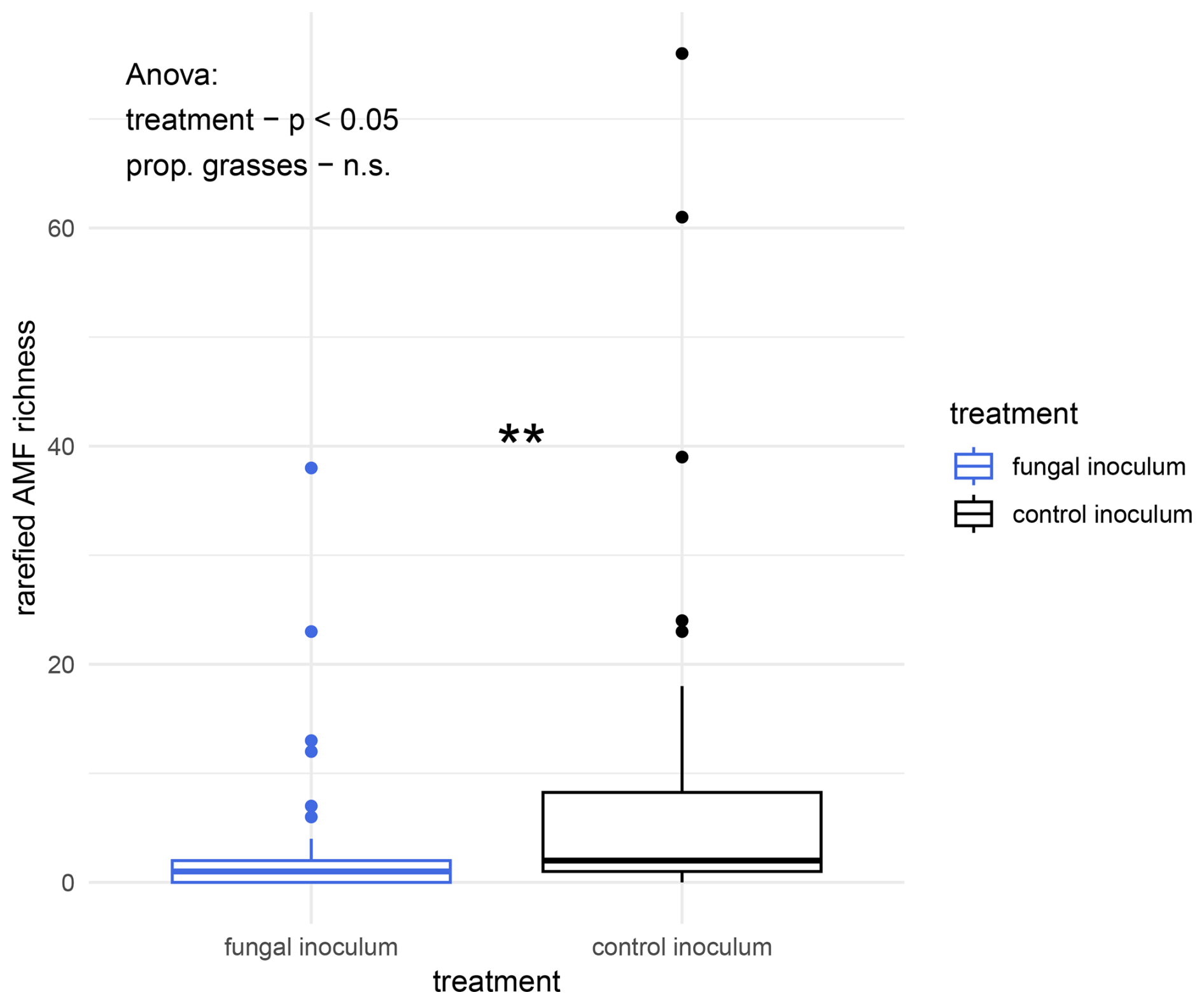
Figure 1Differences in arbuscular mycorrhizal fungal (AMF) richness in samples with living AMF inoculum (mycorrhizal) and sterilized inoculum (non-mycorrhizal). Boxplots represent the rarefied number of AMF taxa for non-mycorrhizal (NM) and mycorrhizal (M) treatments. AMF richness was significantly lower in mycorrhizal treatments compared to non-mycorrhizal treatments. The proportion of grasses had no significant effect on AMF richness. ** indicates p<0.01.
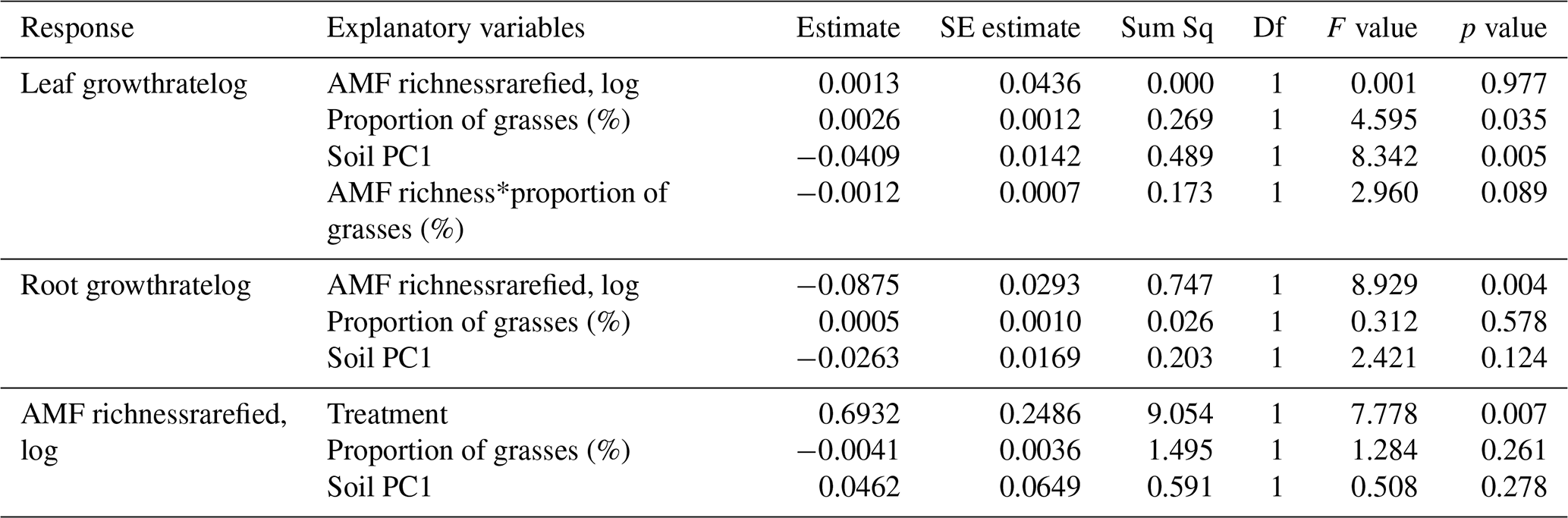
Table 1Summary of statistical results from linear models of leaf growth rate, root growth rate, and rarefied arbuscular mycorrhizal fungal (AMF) richness. Shown are effect estimates and their standard errors (SE) retrieved from linear models, as well as the sum of squares (Sum Sq), degrees of freedom (Df), test statistic (F value), and significance (p value) for all explanatory variables from ANOVAs. All response variables were log transformed to conform with parametric modeling assumptions.
3.2 AMF diversity and plant functional diversity effects on plant biomass production
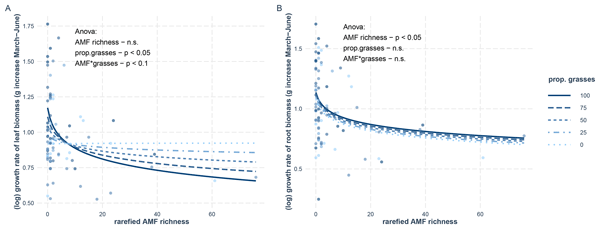
Plant biomass production over the course of the experiment, measured as plant growth rates, decreased with AMF diversity (Fig. 2). For leaf biomass production, the degree of decrease depended on the proportion of grasses with negative responses to AMF richness increasing with proportion of grasses (F=3.564, p=0.063; Fig. 2A). Due to the experimental communities with very high AMF richness (>40 taxa) this grass-proportion-mediated AMF richness effect was weak and only marginally significant (p<0.1). Root biomass production showed a clear decline with increasing AMF richness independently of grass proportion in experimental communities (F=8.810, p=0.004; Fig. 2B). Grass dominance showed significant effects on aboveground (Fig. 2A) but not on belowground biomass production (Fig. 2B).
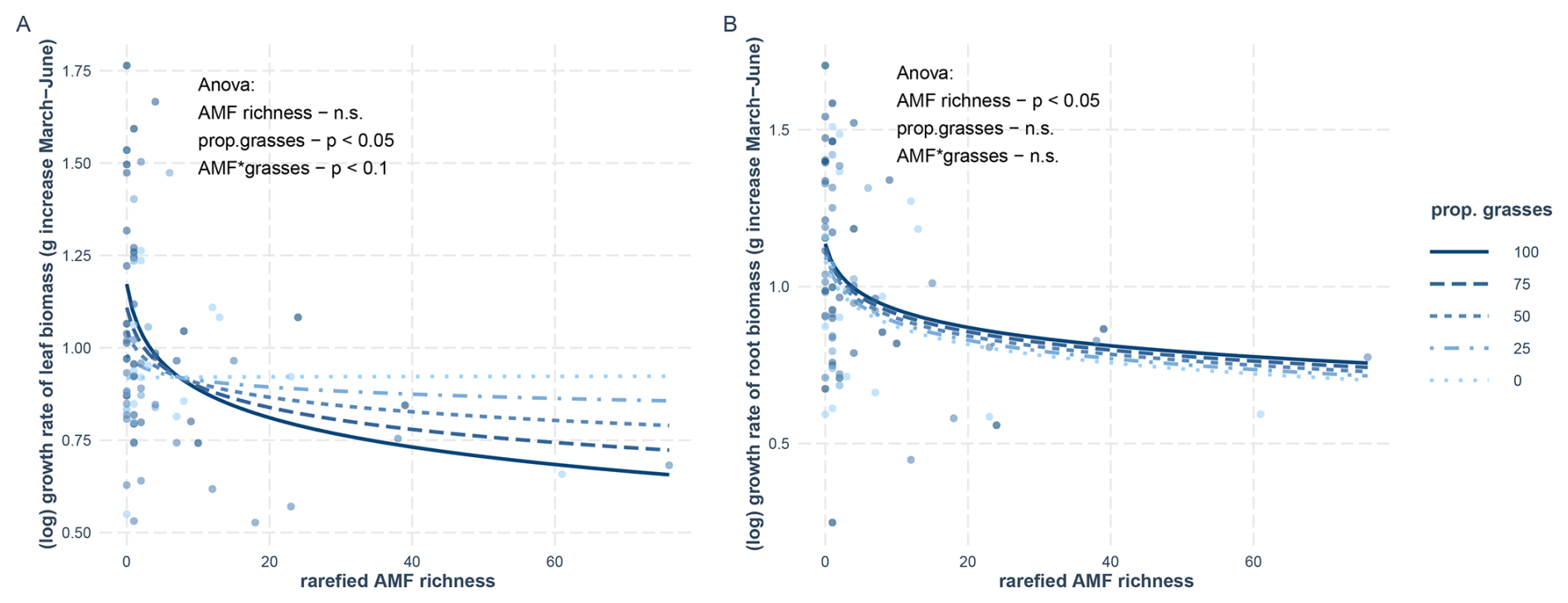
Figure 2Effects of arbuscular mycorrhizal fungal (AMF) richness and grass proportion (prop. grasses, %) on the growth rate of leaf (A) and root (B) biomass. Growth responses to AMF richness are shown for different degrees of grass proportion. Rarefied AMF richness was used as a response variable.
4.1 Focus shift: from AMF presence to AMF diversity effects
The effect of AMF on ecosystem functioning is a developing area of plant-mycorrhizal research (van der Heijden et al., 2015; Klironomos et al., 2010). However, the contribution of AMF biodiversity to ecosystem functioning remains yet understudied (Powell and Rillig, 2018), while being crucial to understand soil functioning and plant community dynamics. Our first hypothesis explicitly addressed the effect of the presence of AMF and their interaction with plant functional diversity on biomass production. However, as stated in Sect. 3.1, both treatments, inoculated with living AMF and control inoculum, showed a similar degree of AMF colonization. This suggests that our initial focus on AMF presence-versus-absence effect was no longer relevant, and we shifted the focus of our analysis to the influence of AMF richness and plant functional diversity on biomass production, as discussed in detail in Sect. 4.2. This shift aligns more closely with natural and agricultural systems, where soils are rarely AMF-free and where plant responses occur in the presence of naturally occurring AMF communities rather than sterile controls (e.g., Wubs et al., 2016; Neuenkamp et al., 2019). Although unexpected, this outcome gave us the opportunity to discuss the possible impact of commercial AMF inocula, resulting in higher plant biomass production but at the price of naturally occurring AMF diversity.
Regarding the possible pathways of the AMF contamination of control pots, three different pathways are most likely. First, although the soil irradiation was carried out by an external facility following standard procedures as described in the Methods section, incomplete sterilization cannot be entirely ruled out. Second, AMF spores may disperse via air and dust (Chaudhary et al., 2020), particularly under greenhouse conditions with high humidity and open ventilation. This was the case in our experiment at the beginning due to high outside humidity after spring rainfalls. In this case, the contamination should have affected both pots, inoculated with fungal and control inoculum. However, it is likely that the already established, highly competitive inoculated AMF occupied the available root and soil niches, limiting the establishment of external background taxa through competitive exclusion. Finally, seeds themselves may represent a potential source of AMF propagules even after their sterilization as described in the Methods section and as demonstrated for Glomeromycota DNA in surface-sterilized seeds of grass species (Guo et al., 2020).
4.2 Effects of AMF richness and plant functional composition on biomass production
Contrary to the expectation that greater AMF and plant functional diversity enhances ecosystem functioning, we observed that increased AMF richness negatively affected plant biomass production, with this effect being either independent of or decreasing with functional diversity (hypothesis 2). Analysis of AMF root colonization and AMF community composition showed that inoculation effects were mostly driven by shifts in AMF richness and not AMF abundance. These results support earlier studies showing clear effects of AMF composition on plant competition and ultimately community assembly (Neuenkamp et al., 2019). Theory predicts stronger functioning of diverse communities due to complementary resource use (Wagg et al., 2011; Powell and Rillig, 2018), and one should thus expect stronger promotion of plant biomass production by diverse AMF communities (Maherali and Klironomos, 2007; Wagg et al., 2014). Our results contradict this assumption as biomass production decreased with AMF richness, suggesting that dominance of a few well-functioning AMF taxa was the more relevant driver of biomass production.
Indeed, differences in AMF functionality, such as promotion of plant growth, exist (Maherali and Klironomos, 2007), with the inoculated taxa being among those known for their functionality and competitiveness (e.g., Rhizoglomus intraradices, Glomus claroideum) (Janoušková et al., 2013). Supporting this assumption, inoculation coincided in our experiment with higher biomass production and lower AMF richness, thereby indicating that inoculation steered AMF communities to the dominance of the four inoculated AMF taxa (Janoušková et al., 2017; Islam et al., 2021). AMF richness diversity was consequently higher in control than inoculated plant communities, showing an unsuccessful AMF-free control treatment, which was underlined by equal AMF root colonization across treatments. Nevertheless, DNA-based assessment of AMF richness allowed us to detect an inoculation-generated gradient of AMF richness with subsequent effects on plant biomass production, highlighting the relevance of qualitative AMF community aspects like composition beyond purely presence/absence when assessing AMF effects.
Finally, the observed dependency of aboveground biomass responses to AMF richness on plant functional diversity (i.e. grass dominance) in our experimental communities support the idea of coupling between plant and AMF functional composition (Neuenkamp et al., 2019; Tedersoo et al., 2020). It was expected that where AMF facilitate resource sharing, this effect should become stronger with increasing AMF and plant functional diversity through diversified resource uptake strategies including AM symbiosis, leading to synergistic effects that boost ecosystem functioning (Tilman et al., 1997; Cadotte et al., 2011). Such synergy implies that higher plant functional diversity should enable stronger AMF effects by enhancing the chance of effective matches between plant and AMF individuals based on their host preferences. However, growth rate dynamics observed in our experiment contradict the assumed positive relationship between AMF and plant diversity (Hiiesalu et al., 2014), as biomass production in grass-dominated plant communities profited not from high AMF diversity but from the engineered low-diversity inoculum. In contrast, plant communities predominantly composed of forb species benefited more from the presence of a diverse AMF community. As previously mentioned, these observations could be related to agricultural soils, where competitive AMF strains can be used to enhance crop production (George and Ray, 2023; Hussain et al., 2021) but at the cost of sacrificing soil mycorrhizal diversity (Neuenkamp et al., 2024).
4.3 Relevance of AMF and plant functional composition on ecosystem functioning
Our hypotheses focused on the mediation of AMF effects on biomass production by plant functional composition, whose results we discussed above. While we found little evidence for interactive effects, our study showed that plant aboveground and belowground biomass production was mediated primarily by different drivers.
Plant functional composition was the primary driver of grassland aboveground biomass production, while AMF diversity was the primary driver of grassland belowground biomass. Contrary to our expectations, and similar to the AMF richness effects, aboveground biomass was highest in communities dominated by grasses, while a mix of functional types (grasses and forbs) did not increase biomass production. We observed no effect of functional composition on belowground biomass production, which is surprising since one proposed mechanism by which ecosystem functioning might be regulated is plant functional diversity (Gross et al., 2017; Cadotte et al., 2011; Le Bagousse-Pinguet et al., 2021). Grasses and forbs often have different root systems and strategies for resource acquisition (Neuenkamp et al., 2019; Hoeksema et al., 2010), which should allow them to acquire nutrients more efficiently, thus enhancing overall biomass production in the community. However, our result indicates that the presence and influence of dominant grass species play a significant role in driving aboveground biomass production in experimental grassland ecosystems. Grasses are known for their high growth rates and efficient resource acquisition strategies (Da Silveira Pontes et al., 2015). Additionally, functional traits of dominant types can have an important impact on ecosystem functions because dominant species contribute more to community-level properties than other species (Cheng et al., 2021; Lisner et al., 2023). Indeed, previous studies highlighted that the identification of relevant functional traits of dominant species are essential to understanding the role of plant diversity in such ecosystem processes as aboveground biomass production (Roscher et al., 2012; Cadotte et al., 2009; Lisner et al., 2023). Given that belowground biomass production lacked such a pronounced effect of functional composition (i.e., grass dominance), maybe competition for light in communities was a relevant driver of aboveground biomass (Weiner, 1990). Grasses due to their upright growth can avoid light competition better compared to forbs with larger, more horizontally positioned leaves. Nevertheless, as the observed context-dependency of AMF diversity effects with grass dominance were statistically weak (p<0.1), more experiments are needed to further investigate the nature and relevance of this context-dependency.
Consistent with our expectations, biomass production responded to differences in AMF community structure, although belowground biomass showed a stronger response than aboveground biomass. The relatively stronger effect of AMF richness on belowground compared to aboveground biomass production may be attributed to the resource exchange dynamics between plant species and AMF. Certain plant species may prioritize allocating nutrients to AMF or to belowground biomass rather than allocating them towards aboveground biomass production. Indeed, many grassland species are known to concentrate their biomass belowground (de Miranda et al., 2014). A recent large-scale study demonstrated that mycorrhizal symbiosis enhances soil carbon storage by elevating biomass allocation to belowground (Zhang et al., 2025). Additionally, due to this belowground investment, the hyphal network is expected to be enhanced, improving soil structure and potentially leading to increased water and nutrient uptake and availability for other plant species in the community, affecting plant composition and even promoting plant diversity, as also observed in Zhang et al. (2025).
Our results show that AMF richness and grass dominance independently influenced plant biomass production. Grass dominance increased aboveground biomass, likely reflecting the advantageous morphological and functional traits of grass species. In contrast, AMF richness had a stronger effect on belowground biomass, with only a weak influence on aboveground productivity, suggesting that AMF primarily enhance root-mediated resource acquisition and allocation. However, inoculation also reduced overall AMF richness, likely due to the dominance of the competitive strains included in the inoculum. This finding has implications for sustainable agriculture, where AMF are often promoted as a “green” alternative to chemical fertilizers (George and Ray, 2023), but their consequences on local soil biodiversity, biotic interactions, and ecosystem functioning are poorly understood (Neuenkamp et al., 2024). Thus, a next step would be to assess the coupling of AMF and plant functional diversity effects on ecosystem processes such as nutrient cycling, especially as our models revealed some treatment-dependent variation in soil nutrient availability.
Table A1Full list of the experimental plant communities' composition; each community contains four individuals. Communities labelled as “M” contain living AMF inoculum, the ones labelled as “NM” contain sterile AMF inoculum.

Table A2Best selected allometric relationships for aboveground biomass for each experimental plant species. The R2 of Spearman rank correlation tests are shown with their corresponding p values (in brackets).
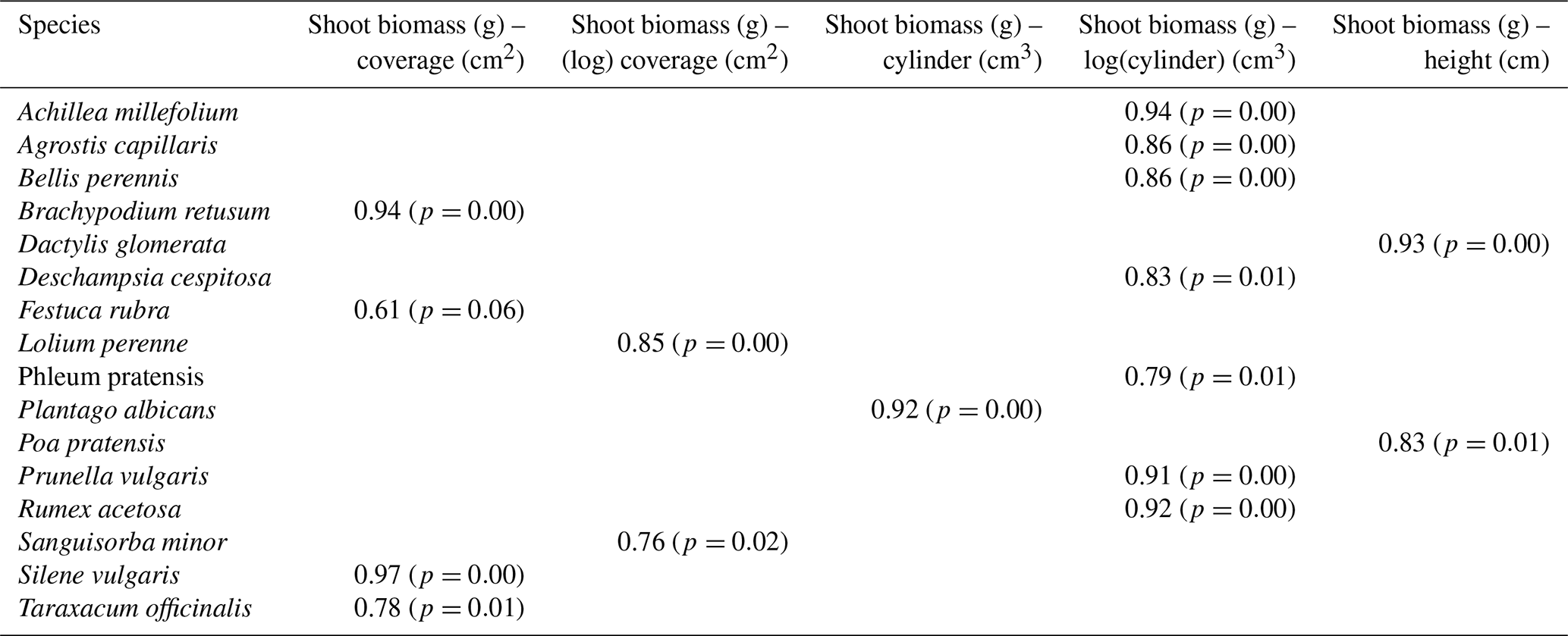
Table A3Best selected allometric relationships for belowground biomass for each experimental plant species. The R2 of Spearman rank correlation tests are shown with their corresponding p values (in brackets).
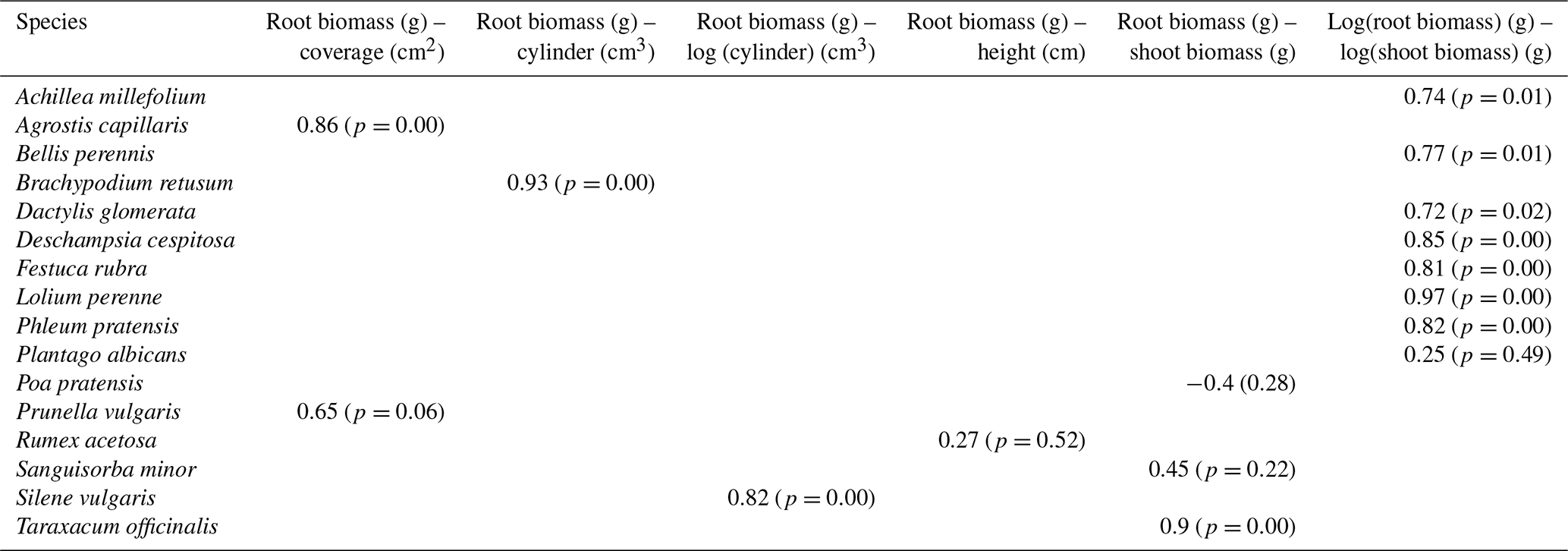
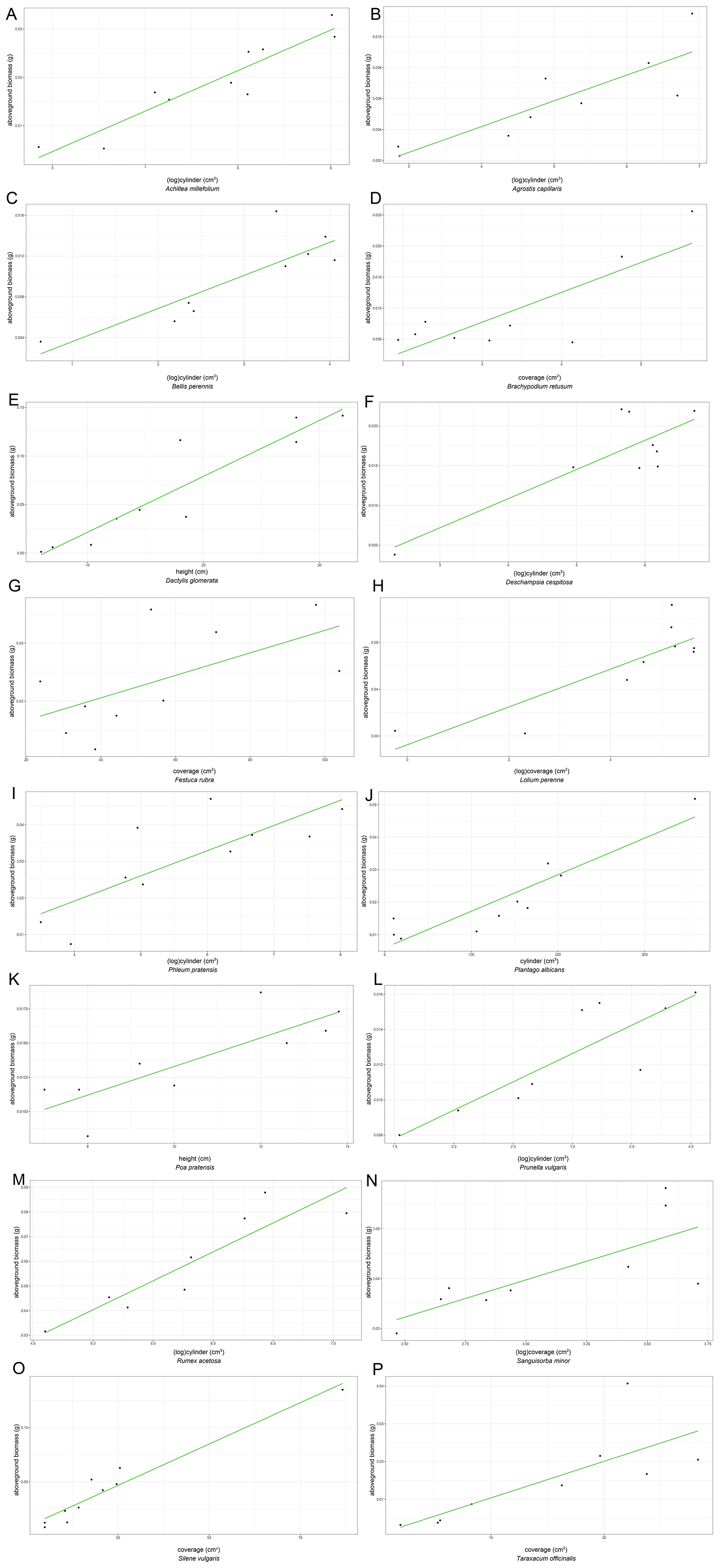
Figure A1Correlation plots (A–P) showing the relationships between different variables and aboveground biomass for all 16 selected species, represented in the alphabetic order. The plots illustrate the correlations between height, cylinder volume, (log)cylinder volume, coverage, log(coverage), and other relevant variables used in estimating aboveground biomass.
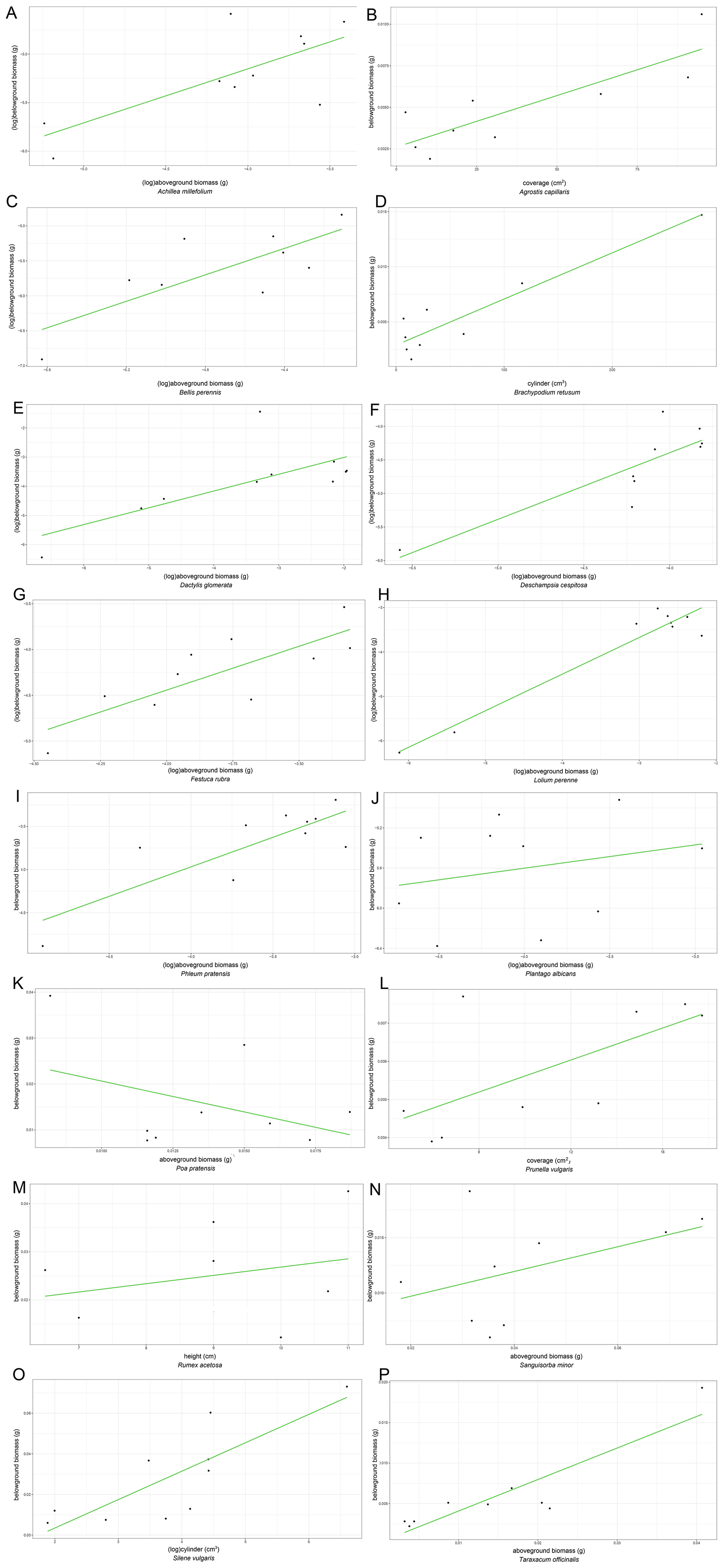
Figure A2Correlation plots (A–P) showing the relationships between different variables and belowground biomass for all 16 selected species, represented in the alphabetic order. The plots illustrate the correlations between height, cylinder volume, (log)cylinder volume, coverage, log(coverage), aboveground biomass, and other relevant variables used in estimating belowground biomass.

Table A5Complete table for growth rate, i.e., biomass production, of each experimental plant community and the percentage of their grass dominancy.

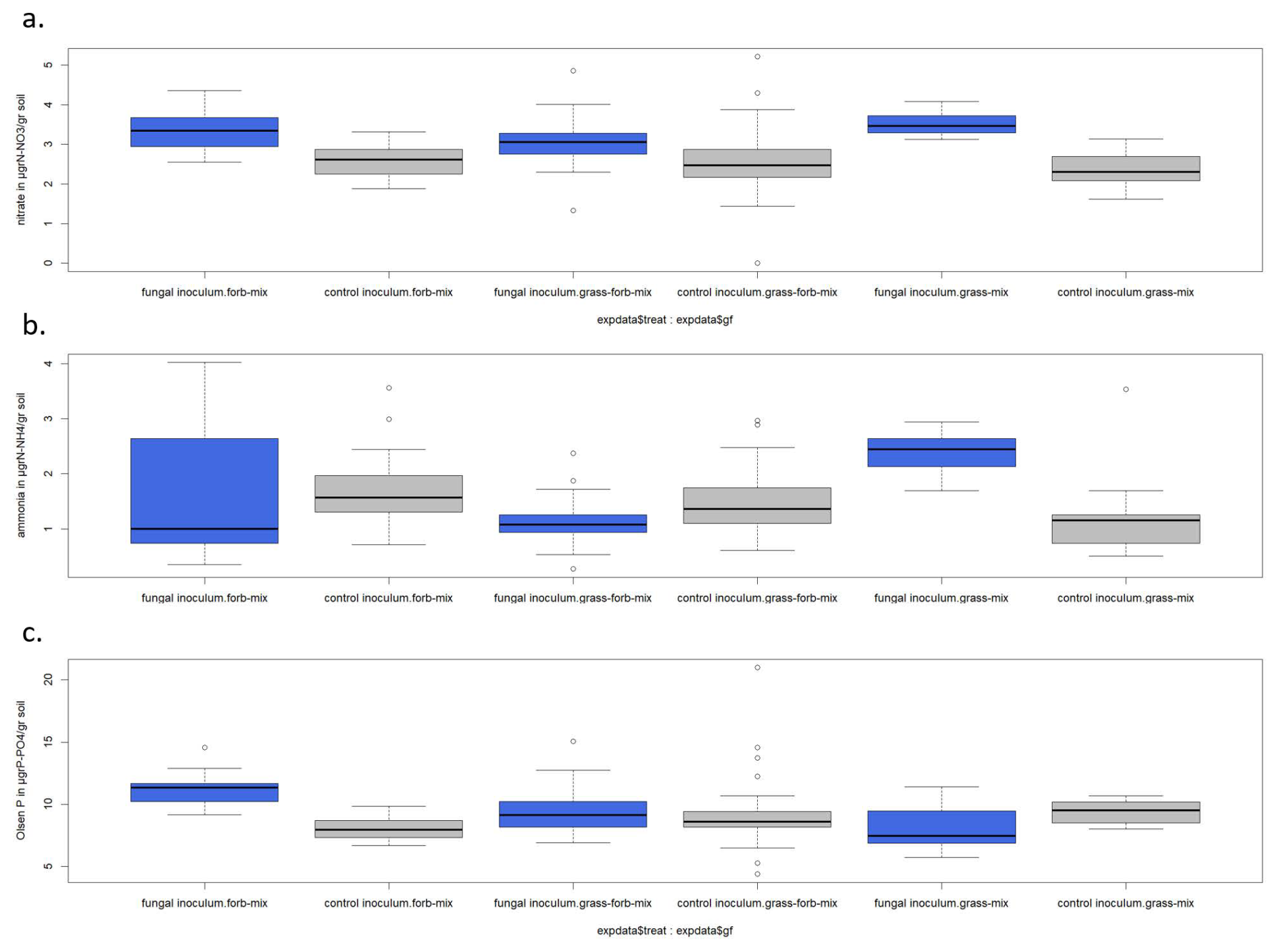
Figure A3Boxplots showing the variation in plant-available nitrate (a), ammonium (b), and phosphate (c) among treatment and experimental plant composition for all plots (n=160).
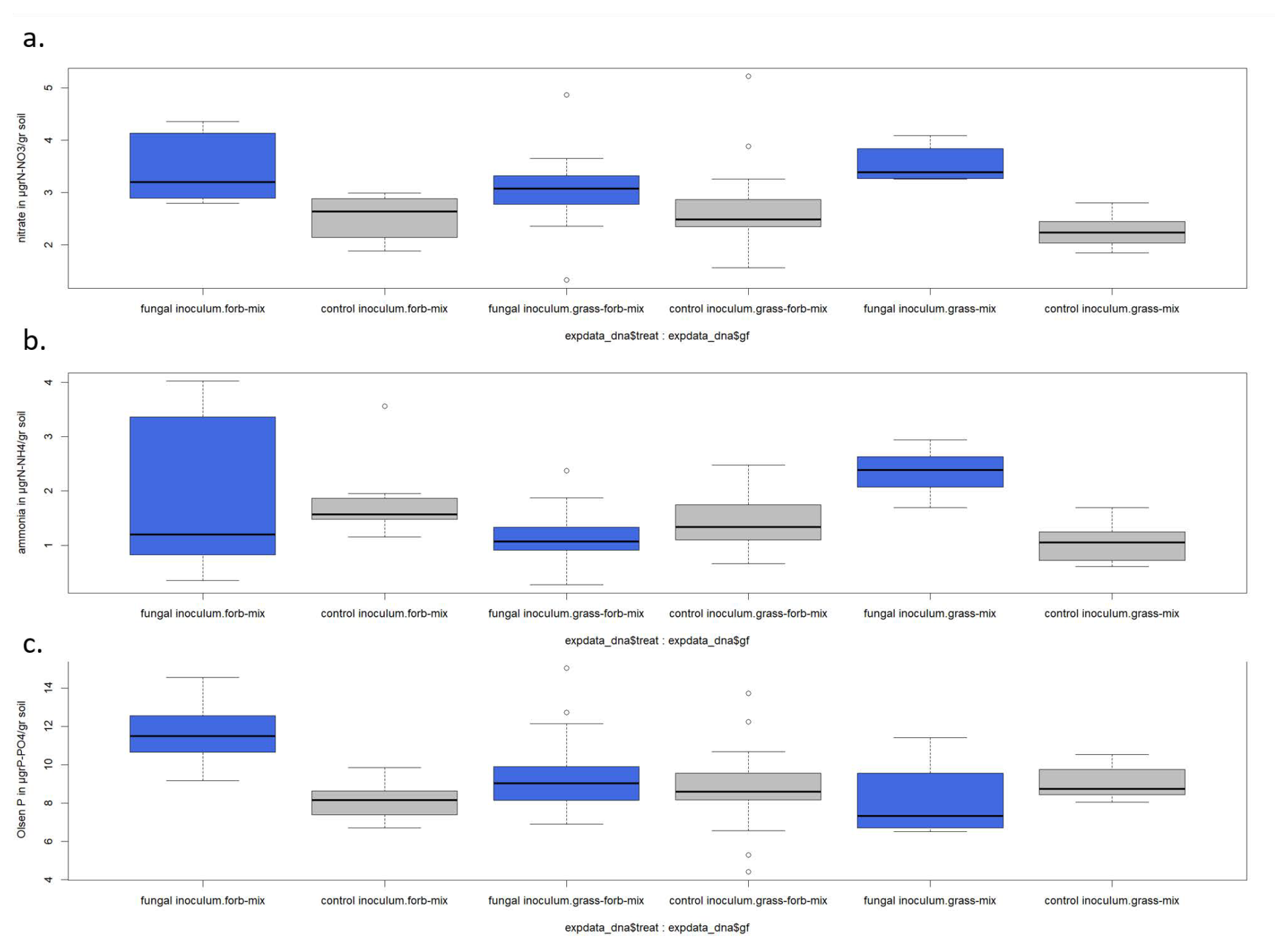
Figure A4Boxplots showing the variation in plant-available nitrate (a), ammonium (b), and phosphate (c) among treatment and experimental plant composition for only the plots where soil DNA was also analysed (n=80).
RCode used for data preparation and analysis is publicly available via our GiHub repository, linked with doi via Zenodo (https://doi.org/10.5281/zenodo.20957440, Neuenkamp, 2026).
Representative sequences for AMF treatment combinations are accessible from the European Nucleotide Archive under BioProject ID PRJNA1345342. All analysed data are publicly available via our Zenodo repository (https://doi.org/10.5281/zenodo.18924702, Neuenkamp and Shpilkina, 2026).
LN conceived the study. The greenhouse experiment was designed by LN, with MvdH, FTM, FdB, MZ, BG, VO, and SA contributing to the finalisation of the design. MvdH contributed the fungal inoculum. The greenhouse experiment was carried out primarily by LN, YS, and SA. BG and VO assisted with setting up and harvesting the experiment. Laboratory analyses were performed by YS, VO, BG, LN, MV, and SA. Data processing and statistical analyses were conducted by YS, LN, and MV, with additional support for analytical decisions and interpretation from all co-authors. YS and LN wrote the first draft of the article. All authors contributed to discussions on experimental design, provided input on data analysis, reviewed the article, and approved the final version. LN coordinated the project and managed funding.
The contact author has declared that none of the authors has any competing interests.
Publisher's note: Copernicus Publications remains neutral with regard to jurisdictional claims made in the text, published maps, institutional affiliations, or any other geographical representation in this paper. The authors bear the ultimate responsibility for providing appropriate place names. Views expressed in the text are those of the authors and do not necessarily reflect the views of the publisher.
MV and MZ were funded by the Estonian Research Council (PRG 1836) and by the Estonian Ministry of Education and Research (Centre of Excellence AgroCropFuture “Agroecology and new crops in future climates”, TK200). LN was funded by the European Union under EXCELLENT SCIENCE – Marie Skłodowska-Curie Actions (MYFUN, 835472). We thank the entire Dryland Ecology and Global Change Lab for helping with the set up and harvest of the experiment. FTM acknowledges support from the King Abdullah University of Science and Technology (KAUST). YS was supported through a research technician contract funded by the Ajuntament de Barcelona and “la Caixa” Foundation.
This research has been supported by the EU H2020 Marie Skłodowska-Curie Actions (grant no. 835472) and the Haridus-ja Teadusministeerium (grant no. TK200).
This paper was edited by Daniel Montesinos and reviewed by Celestino Quintela-Sabarís and three anonymous referees.
Ali, A., Xu, M.-S., Zhao, Y.-T., Zhang, Q.-Q., Zhou, L.-L., Yang, X.-D., and Yan, E.-R.: Allometric biomass equations for shrub and small tree species in subtropical China, Silva Fenn., 49, https://doi.org/10.14214/sf.1275, 2015.
Augé, R. M., Toler, H. D., and Saxton, A. M.: Mycorrhizal Stimulation of Leaf Gas Exchange in Relation to Root Colonization, Shoot Size, Leaf Phosphorus and Nitrogen: A Quantitative Analysis of the Literature Using Meta-Regression, Front. Plant Sci., 7, https://doi.org/10.3389/fpls.2016.01084, 2016.
Brito, I., Carvalho, M., and Goss, M. J.: Managing the functional diversity of arbuscular mycorrhizal fungi for the sustainable intensification of crop production, Plants, People, Planet, 3, 491–505, https://doi.org/10.1002/ppp3.10212, 2021.
Cadotte, M. W., Cavender-Bares, J., Tilman, D., and Oakley, T. H.: Using Phylogenetic, Functional and Trait Diversity to Understand Patterns of Plant Community Productivity, PLoS One, 4, e5695, https://doi.org/10.1371/journal.pone.0005695, 2009.
Cadotte, M. W., Carscadden, K., and Mirotchnick, N.: Beyond species: functional diversity and the maintenance of ecological processes and services, J. Appl. Ecol., 48, 1079–1087, https://doi.org/10.1111/j.1365-2664.2011.02048.x, 2011.
Chaudhary, V. B., Nolimal, S., Sosa-Hernández, M. A., Egan, C., and Kastens, J.: Trait-based aerial dispersal of arbuscular mycorrhizal fungi, New Phytol., 228, 238–252, https://doi.org/10.1111/nph.16667, 2020.
Cheng, Z., Cui, Z., Shi, J., Liu, Y., La Pierre, K. J., and Wu, G.-L.: Plant functional types drive differential responses of grassland ecosystem functions along a precipitation gradient, Ecol. Indic., 133, 108433, https://doi.org/10.1016/j.ecolind.2021.108433, 2021.
Conti, G., Urcelay, C., Gundel, P. E., and Piñeiro, G.: The potential of arbuscular mycorrhizal fungi to improve soil organic carbon in agricultural ecosystems: A meta-analytical approach, Funct. Ecol., 39, 1016–1030, https://doi.org/10.1111/1365-2435.14753, 2025.
Da Silveira Pontes, L., Maire, V., Schellberg, J., and Louault, F.: Grass strategies and grassland community responses to environmental drivers: a review, Agron. Sustain. Dev., 35, 1297–1318, https://doi.org/10.1007/s13593-015-0314-1, 2015.
De Miranda, S. D. C., Bustamante, M., Palace, M., Hagen, S., Keller, M., and Ferreira, L. G.: Regional Variations in Biomass Distribution in Brazilian Savanna Woodland, Biotropica, 46, 125–138, https://doi.org/10.1111/btp.12095, 2014.
Delgado-Baquerizo, M., Maestre, F. T., Reich, P. B., Jeffries, T. C., Gaitan, J. J., Encinar, D., Berdugo, M., Campbell, C. D., and Singh, B. K.: Microbial diversity drives multifunctionality in terrestrial ecosystems, Nat. Commun., 7, 10541, https://doi.org/10.1038/ncomms10541, 2016.
Díaz, S. and Cabido, M.: Vive la différence: plant functional diversity matters to ecosystem processes, Trends Ecol. Evol., 16, 646–655, https://doi.org/10.1016/S0169-5347(01)02283-2, 2001.
Eisenhauer, N., Reich, P. B., and Scheu, S.: Increasing plant diversity effects on productivity with time due to delayed soil biota effects on plants, Basic Appl. Ecol., 13, 571–578, https://doi.org/10.1016/j.baae.2012.09.002, 2012.
Eisenhauer, N., Barnes, A. D., Cesarz, S., Craven, D., Ferlian, O., Gottschall, F., Hines, J., Sendek, A., Siebert, J., Thakur, M. P., and Türke, M.: Biodiversity–ecosystem function experiments reveal the mechanisms underlying the consequences of biodiversity change in real world ecosystems, J. Veg. Sci., 27, 1061–1070, https://doi.org/10.1111/jvs.12435, 2016.
Elliott, A. J., Daniell, T. J., Cameron, D. D., and Field, K. J.: A commercial arbuscular mycorrhizal inoculum increases root colonization across wheat cultivars but does not increase assimilation of mycorrhiza-acquired nutrients, Plants, People, Planet, 3, 588–599, https://doi.org/10.1002/ppp3.10094, 2020.
Fernández, J. A., Niell, F. X., and Lucena, J.: A rapid and sensitive automated determination of phosphate in natural waters1, Limnol. Oceanogr., 30, 227–230, https://doi.org/10.4319/lo.1985.30.1.0227, 1985.
Fox, J., Weisberg, S., Price, B., Adler, D., Bates, D., Baud-Bovy, G., Bolker, B., Ellison, S., Firth, D., Friendly, M., Gorjanc, G., Graves, S., Heiberger, R., Krivitsky, P., Laboissiere, R., Maechler, M., Monette, G., Murdoch, D., Nilsson, H., Ogle, D., Proctor, I., Ripley, B., Short, T., Venables, W., Walker, S., Winsemius, D., Zeileis, A., and R-Core: car: Companion to Applied Regression, https://doi.org/10.32614/CRAN.package.car, 2019.
George, N. P. and Ray, J. G.: The inevitability of arbuscular mycorrhiza for sustainability in organic agriculture – A critical review, Front. Sustain. Food Syst., 7, 1124688, https://doi.org/10.3389/fsufs.2023.1124688, 2023.
Godoy, R., Acuña, L., Silva-Flores, P., Aguilera, P., and Marín, C.: Native Arbuscular Mycorrhizal Fungi Improved Araucaria araucana Growth over Commercial Inoculum Under Greenhouse and Field Conditions, J. Soil Sci. Plant Nut., 23, 6459–6468, https://doi.org/10.1007/s42729-023-01501-2, 2023.
Gross, N., Bagousse-Pinguet, Y. L., Liancourt, P., Berdugo, M., Gotelli, N. J., and Maestre, F. T.: Functional trait diversity maximizes ecosystem multifunctionality, Nat. Ecol. Evol., 1, 0132, https://doi.org/10.1038/s41559-017-0132, 2017.
Guo, J., Bowatte, S., and Hou, F.: Diversity of endophytic bacteria and fungi in seeds of Elymus nutans growing in four locations of Qinghai Tibet Plateau, China, Plant Soil, 459, 49–63, https://doi.org/10.1007/s11104-020-04608-y, 2020.
Hart, M. M., Reader, R. J., and Klironomos, J. N.: Plant coexistence mediated by arbuscular mycorrhizal fungi, Trends Ecol. Evol., 18, 418–423, https://doi.org/10.1016/S0169-5347(03)00127-7, 2003.
Heinen, R., Biere, A., Harvey, J. A., and Bezemer, T. M.: Effects of Soil Organisms on Aboveground Plant-Insect Interactions in the Field: Patterns, Mechanisms and the Role of Methodology, Front. Ecol. Evol., 6, https://doi.org/10.3389/fevo.2018.00106, 2018.
Hiiesalu, I., Pärtel, M., Davison, J., Gerhold, P., Metsis, M., Moora, M., Öpik, M., Vasar, M., Zobel, M., and Wilson, S. D.: Species richness of arbuscular mycorrhizal fungi: associations with grassland plant richness and biomass, New Phytol., 203, 233–244, https://doi.org/10.1111/nph.12765, 2014.
Hoeksema, J. D., Chaudhary, V. B., Gehring, C. A., Johnson, N. C., Karst, J., Koide, R. T., Pringle, A., Zabinski, C., Bever, J. D., Moore, J. C., Wilson, G. W. T., Klironomos, J. N., and Umbanhowar, J.: A meta-analysis of context-dependency in plant response to inoculation with mycorrhizal fungi, Ecol. Lett., 13, 394–407, https://doi.org/10.1111/j.1461-0248.2009.01430.x, 2010.
Huff, S., Ritchie, M., and Temesgen, H.: Allometric equations for estimating aboveground biomass for common shrubs in northeastern California, Forest Ecol. Manag., 398, 48–63, https://doi.org/10.1016/j.foreco.2017.04.027, 2017.
Hussain, S., Sharif, M., and Ahmad, W.: Selection of efficient phosphorus solubilizing bacteria strains and mycorrhizea for enhanced cereal growth, root microbe status and N and P uptake in alkaline calcareous soil, Soil Sci. Plant Nutr., 67, 259–268, https://doi.org/10.1080/00380768.2021.1904793, 2021.
Ihrmark, K., Bödeker, I. T. M., Cruz-Martinez, K., Friberg, H., Kubartova, A., Schenck, J., Strid, Y., Stenlid, J., Brandström-Durling, M., Clemmensen, K. E., and Lindahl, B. D.: New primers to amplify the fungal ITS2 region – evaluation by 454-sequencing of artificial and natural communities, FEMS Microbiol. Ecol., 82, 666–677, https://doi.org/10.1111/j.1574-6941.2012.01437.x, 2012.
Islam, M. N., Germida, J. J., and Walley, F. L.: Survival of a commercial AM fungal inoculant and its impact on indigenous AM fungal communities in field soils, Appl. Soil Ecol., 166, 103979, https://doi.org/10.1016/j.apsoil.2021.103979, 2021.
Janoušková, M., Krak, K., Wagg, C., Štorchová, H., Caklová, P., and Vosátka, M.: Effects of Inoculum Additions in the Presence of a Preestablished Arbuscular Mycorrhizal Fungal Community, Appl. Environ. Microb., 79, 6507–6515, https://doi.org/10.1128/AEM.02135-13, 2013.
Janoušková, M., Krak, K., Vosátka, M., Püschel, D., and Štorchová, H.: Inoculation effects on root-colonizing arbuscular mycorrhizal fungal communities spread beyond directly inoculated plants, PLoS One, 12, e0181525, https://doi.org/10.1371/journal.pone.0181525, 2017.
Jansa, J., Finlay, R., Wallander, H., Smith, F. A., and Smith, S. E.: Role of Mycorrhizal Symbioses in Phosphorus Cycling, in: Phosphorus in Action: Biological Processes in Soil Phosphorus Cycling, edited by: Bünemann, E., Oberson, A., and Frossard, E., Springer, Berlin, Heidelberg, 137–168, https://doi.org/10.1007/978-3-642-15271-9_6, 2011.
Jia, Y., van der Heijden, M. G. A., Wagg, C., Feng, G., and Walder, F.: Symbiotic soil fungi enhance resistance and resilience of an experimental grassland to drought and nitrogen deposition, J. Ecol., 109, 3171–3181, https://doi.org/10.1111/1365-2745.13521, 2021.
Jing, X., Sanders, N. J., Shi, Y., Chu, H., Classen, A. T., Zhao, K., Chen, L., Shi, Y., Jiang, Y., and He, J.-S.: The links between ecosystem multifunctionality and above- and belowground biodiversity are mediated by climate, Nat. Commun., 6, 8159, https://doi.org/10.1038/ncomms9159, 2015.
Johnson, D., Vandenkoornhuyse, P. J., Leake, J. R., Gilbert, L., Booth, R. E., Grime, J. P., Young, J. P. W., and Read, D. J.: Plant communities affect arbuscular mycorrhizal fungal diversity and community composition in grassland microcosms, New Phytol., 161, 503–515, https://doi.org/10.1046/j.1469-8137.2003.00938.x, 2003.
Jung, S. C., Martinez-Medina, A., Lopez-Raez, J. A., and Pozo, M. J.: Mycorrhiza-Induced Resistance and Priming of Plant Defenses, J. Chem. Ecol., 38, 651–664, https://doi.org/10.1007/s10886-012-0134-6, 2012.
Klironomos, J., Zobel, M., Tibbett, M., Stock, W. D., Rillig, M. C., Parrent, J. L., Moora, M., Koch, A. M., Facelli, J. M., Facelli, E., Dickie, I. A., and Bever, J. D.: Forces that structure plant communities: quantifying the importance of the mycorrhizal symbiosis, New Phytol., 189, 366–370, https://doi.org/10.1111/j.1469-8137.2010.03550.x, 2010.
Kohout, P., Sudová, R., Janoušková, M., Čtvrtlíková, M., Hejda, M., Pánková, H., Slavíková, R., Štajerová, K., Vosátka, M., and Sýkorová, Z.: Comparison of commonly used primer sets for evaluating arbuscular mycorrhizal fungal communities: Is there a universal solution?, Soil Biol. Biochem., 68, 482–493, https://doi.org/10.1016/j.soilbio.2013.08.027, 2013.
Kojima, T., Jenkins, S., Weerasekara, A., and Fan, J.-W.: Arbuscular Mycorrhizal Diversity and Function in Grassland Ecosystems, in: Mycorrhizal Fungi: Use in Sustainable Agriculture and Land Restoration, edited by: Solaiman, Z. M., Abbott, L. K., and Varma, A., Springer, Berlin, Heidelberg, 149–169, https://doi.org/10.1007/978-3-662-45370-4_9, 2014.
Le Bagousse-Pinguet, Y., Gross, N., Saiz, H., Maestre, F. T., Ruiz, S., Dacal, M., Asensio, S., Ochoa, V., Gozalo, B., Cornelissen, J. H. C., Deschamps, L., García, C., Maire, V., Milla, R., Salinas, N., Wang, J., Singh, B. K., and García-Palacios, P.: Functional rarity and evenness are key facets of biodiversity to boost multifunctionality, P. Natl. Acad. Sci. USA, 118, e2019355118, https://doi.org/10.1073/pnas.2019355118, 2021.
Lekberg, Y., Vasar, M., Bullington, L. S., Sepp, S., Antunes, P. M., Bunn, R., Larkin, B. G., and Öpik, M.: More bang for the buck? Can arbuscular mycorrhizal fungal communities be characterized adequately alongside other fungi using general fungal primers?, New Phytol., 220, 971–976, https://doi.org/10.1111/nph.15035, 2018.
Lisner, A., Konečná, M., Blažek, P., and Lepš, J.: Community biomass is driven by dominants and their characteristics – The insight from a field biodiversity experiment with realistic species loss scenario, J. Ecol., 111, 240–250, https://doi.org/10.1111/1365-2745.14029, 2023.
Maestre, F. T. and Reynolds, J. F.: Nutrient Availability and Atmospheric CO2 Partial Pressure Modulate the Effects of Nutrient Heterogeneity on the Size Structure of Populations in Grassland Species, Ann. Bot., 98, 227–235, https://doi.org/10.1093/aob/mcl093, 2006.
Maestre, F. T., Bradford, M. A., and Reynolds, J. F.: Soil heterogeneity and community composition jointly influence grassland biomass, J. Veg. Sci., 17, 261–270, https://doi.org/10.1111/j.1654-1103.2006.tb02445.x, 2006.
Maestre, F. T., Bagousse-Pinguet, Y. L., Delgado-Baquerizo, M., Eldridge, D. J., Saiz, H., Berdugo, M., Gozalo, B., Ochoa, V., Guirado, E., García-Gómez, M., Valencia, E., Gaitán, J. J., Asensio, S., Mendoza, B. J., Plaza, C., Díaz-Martínez, P., Rey, A., Hu, H.-W., He, J.-Z., Wang, J.-T., Lehmann, A., Rillig, M. C., Cesarz, S., Eisenhauer, N., Martínez-Valderrama, J., Moreno-Jiménez, E., Sala, O., Abedi, M., Ahmadian, N., Alados, C. L., Aramayo, V., Amghar, F., Arredondo, T., Ahumada, R. J., Bahalkeh, K., Salem, F. B., Blaum, N., Boldgiv, B., Bowker, M. A., Bran, D., Bu, C., Canessa, R., Castillo-Monroy, A. P., Castro, H., Castro, I., Castro-Quezada, P., Chibani, R., Conceição, A. A., Currier, C. M., Darrouzet-Nardi, A., Deák, B., Donoso, D. A., Dougill, A. J., Durán, J., Erdenetsetseg, B., Espinosa, C. I., Fajardo, A., Farzam, M., Ferrante, D., Frank, A. S. K., Fraser, L. H., Gherardi, L. A., Greenville, A. C., Guerra, C. A., Gusmán-Montalvan, E., Hernández-Hernández, R. M., Hölzel, N., Huber-Sannwald, E., Hughes, F. M., Jadán-Maza, O., Jeltsch, F., Jentsch, A., Kaseke, K. F., Köbel, M., Koopman, J. E., Leder, C. V., Linstädter, A., Roux, P. C. L., Li, X., Liancourt, P., Liu, J., Louw, M. A., Maggs-Kölling, G., Makhalanyane, T. P., Issa, O. M., Manzaneda, A. J., Marais, E., Mora, J. P., Moreno, G., Munson, S. M., Nunes, A., Oliva, G., Oñatibia, G. R., Peter, G., Pivari, M. O. D., Pueyo, Y., Quiroga, R. E., Rahmanian, S., Reed, S. C., et al.: Grazing and ecosystem service delivery in global drylands, Science, 378, 915–920, https://doi.org/10.1126/science.abq4062, 2022.
Magoč, T. and Salzberg, S. L.: FLASH: fast length adjustment of short reads to improve genome assemblies, Bioinformatics, 27, 2957–2963, https://doi.org/10.1093/bioinformatics/btr507, 2011.
Maherali, H. and Klironomos, J. N.: Influence of phylogeny on fungal community assembly and ecosystem functioning, Science, 316, 1746–1748, https://doi.org/10.1126/science.1143082, 2007.
Mariotte, P., Meugnier, C., Johnson, D., Thébault, A., Spiegelberger, T., and Buttler, A.: Arbuscular mycorrhizal fungi reduce the differences in competitiveness between dominant and subordinate plant species, Mycorrhiza, 23, 267–277, https://doi.org/10.1007/s00572-012-0465-8, 2012.
McGonigle, T. P., Miller, M. H., Evans, D. G., Fairchild, G. L., and Swan, J. A.: A new method which gives an objective measure of colonization of roots by vesicular – arbuscular mycorrhizal fungi, New Phytol., 115, 495–501, https://doi.org/10.1111/j.1469-8137.1990.tb00476.x, 1990.
Millennium Ecosystem Assessment (Program) (Ed.): Ecosystems and human well-being: synthesis, Island Press, Washington, DC, 137 pp., ISBN: 1-59726-040-1, 2005.
Mulatu, A., Negash, M., and Asrat, Z.: Species-specific allometric models for reducing uncertainty in estimating above ground biomass at Moist Evergreen Afromontane Forest of Ethiopia, Sci. Rep.-UK, 14, 1147, https://doi.org/10.1038/s41598-023-51002-6, 2024.
Neuenkamp, L.: LoopingLena/MYFUN_experiment-paper_growthrate_grassdominance: v.1.2. RCode to MYFUN_experimental_paper1_grassdominance (MYFUN_experiment_RCode_paper1_v1.2), Zenodo [code], https://doi.org/10.5281/zenodo.20957440, 2026.
Neuenkamp, L. and Shpilkina, Y.: Dataset for “Effects of mycorrhizal fungi and the functional diversity of plants on ecosystem functioning: an experimental approach”, Zenodo [data set], https://doi.org/10.5281/zenodo.18924702, 2026.
Neuenkamp, L., Moora, M., Öpik, M., Davison, J., Gerz, M., Männistö, M., Jairus, T., Vasar, M., and Zobel, M.: The role of plant mycorrhizal type and status in modulating the relationship between plant and arbuscular mycorrhizal fungal communities, New Phytol., 220, 1236–1247, https://doi.org/10.1111/nph.14995, 2018.
Neuenkamp, L., Zobel, M., Lind, E., Gerz, M., and Moora, M.: Arbuscular mycorrhizal fungal community composition determines the competitive response of two grassland forbs, PLoS One, 14, e0219527, https://doi.org/10.1371/journal.pone.0219527, 2019.
Neuenkamp, L., García de León, D., Hamer, U., Hölzel, N., McGale, E., and Hannula, S. E.: Comprehensive tools for ecological restoration of soils foster sustainable use and resilience of agricultural land, Commun. Biol., 7, 1577, https://doi.org/10.1038/s42003-024-07275-2, 2024.
Nilsson, R. H., Larsson, K.-H., Taylor, A. F. S., Bengtsson-Palme, J., Jeppesen, T. S., Schigel, D., Kennedy, P., Picard, K., Glöckner, F. O., Tedersoo, L., Saar, I., Kõljalg, U., and Abarenkov, K.: The UNITE database for molecular identification of fungi: handling dark taxa and parallel taxonomic classifications, Nucleic Acids Res., 47, D259–D264, https://doi.org/10.1093/nar/gky1022, 2018.
Northup, B. K., Zitzer, S. F., Archer, S., McMurtry, C. R., and Boutton, T. W.: Above-ground biomass and carbon and nitrogen content of woody species in a subtropical thornscrub parkland, J. Arid Environ., 62, 23–43, https://doi.org/10.1016/j.jaridenv.2004.09.019, 2005.
Oehl, F., Laczko, E., Bogenrieder, A., Stahr, K., Bösch, R., van der Heijden, M., and Sieverding, E.: Soil type and land use intensity determine the composition of arbuscular mycorrhizal fungal communities, Soil Biol. Biochem., 42, 724–738, https://doi.org/10.1016/j.soilbio.2010.01.006, 2010.
Oksanen, J., Simpson, G. L., Blanchet, F. G., Kindt, R., Legendre, P., Minchin, P. R., O'Hara, R. B., Solymos, P., Stevens, M. H. H., Szoecs, E., Wagner, H., Barbour, M., Bedward, M., Bolker, B., Borcard, D., Borman, T., Carvalho, G., Chirico, M., Caceres, M. D., Durand, S., Evangelista, H. B. A., FitzJohn, R., Friendly, M., Furneaux, B., Hannigan, G., Hill, M. O., Lahti, L., Martino, C., McGlinn, D., Ouellette, M.-H., Cunha, E. R., Smith, T., Stier, A., Braak, C. J. F. T., and Weedon, J.: vegan: Community Ecology Package, https://doi.org/10.32614/CRAN.package.vegan, 2024.
Paudel, S., Longcore, T., MacDonald, B., McCormick, M. K., Szlavecz, K., Wilson, G. W. T., and Loss, S. R.: Belowground interactions with aboveground consequences: Invasive earthworms and arbuscular mycorrhizal fungi, Ecology, 97, 605–614, https://doi.org/10.1890/15-1085, 2016.
Pedersen, T. L.: patchwork: The Composer of Plots, https://doi.org/10.32614/CRAN.package.patchwork, 2024.
Põlme, S., Abarenkov, K., Nilsson, R. H., Lindahl, B. D., Clemmensen, K. E., Kauserud, H., Nguyen, N., Kjøller, R., Bates, S. T., Baldrian, P., Frøslev, T. G., Adojaan, K., Vizzini, A., Suija, A., Pfister, D., Baral, H.-O., Järv, H., Madrid, H., Nordén, J., Liu, J.-K., Pawlowska, J., Põldmaa, K., Pärtel, K., Runnel, K., Hansen, K., Larsson, K.-H., Hyde, K. D., Sandoval-Denis, M., Smith, M. E., Toome-Heller, M., Wijayawardene, N. N., Menolli, N., Reynolds, N. K., Drenkhan, R., Maharachchikumbura, S. S. N., Gibertoni, T. B., Læssøe, T., Davis, W., Tokarev, Y., Corrales, A., Soares, A. M., Agan, A., Machado, A. R., Argüelles-Moyao, A., Detheridge, A., De Meiras-Ottoni, A., Verbeken, A., Dutta, A. K., Cui, B.-K., Pradeep, C. K., Marín, C., Stanton, D., Gohar, D., Wanasinghe, D. N., Otsing, E., Aslani, F., Griffith, G. W., Lumbsch, T. H., Grossart, H.-P., Masigol, H., Timling, I., Hiiesalu, I., Oja, J., Kupagme, J. Y., Geml, J., Alvarez-Manjarrez, J., Ilves, K., Loit, K., Adamson, K., Nara, K., Küngas, K., Rojas-Jimenez, K., Bitenieks, K., Irinyi, L., Nagy, L. G., Soonvald, L., Zhou, L.-W., Wagner, L., Aime, M. C., Öpik, M., Mujica, M. I., Metsoja, M., Ryberg, M., Vasar, M., Murata, M., Nelsen, M. P., Cleary, M., Samarakoon, M. C., Doilom, M., Bahram, M., Hagh-Doust, N., Dulya, O., Johnston, P., Kohout, P., Chen, Q., Tian, Q., Nandi, R., Amiri, R., Perera, R. H., et al.: FungalTraits: a user-friendly traits database of fungi and fungus-like stramenopiles, Fungal Divers., 105, 1–16, https://doi.org/10.1007/s13225-020-00466-2, 2020.
Poorter, H., Niklas, K. J., Reich, P. B., Oleksyn, J., Poot, P., and Mommer, L.: Biomass allocation to leaves, stems and roots: meta-analyses of interspecific variation and environmental control, New Phytol., 193, 30–50, https://doi.org/10.1111/j.1469-8137.2011.03952.x, 2011.
Powell, J. R. and Rillig, M. C.: Biodiversity of arbuscular mycorrhizal fungi and ecosystem function, New Phytol., 220, 1059–1075, https://doi.org/10.1111/nph.15119, 2018.
Pozo, M. J., López-Ráez, J. A., Azcón-Aguilar, C., and García-Garrido, J. M.: Phytohormones as integrators of environmental signals in the regulation of mycorrhizal symbioses, New Phytol., 205, 1431–1436, https://doi.org/10.1111/nph.13252, 2015.
Qin, M., Li, L., Miranda, J.-P., Tang, Y., Song, B., Oosthuizen, M. K., and Wei, W.: Experimental duration determines the effect of arbuscular mycorrhizal fungi on plant biomass in pot experiments: A meta-analysis, Front. Plant Sci., 13, https://doi.org/10.3389/fpls.2022.1024874, 2022.
R Core Team: R: A Language and Environment for Statistical Computing, R Foundation for Statistical Computing, Vienna, Austria, https://www.R-project.org/ (last access: 15 June 2026), 2025.
Revelle, W.: psych: Procedures for Psychological, Psychometric, and Personality Research, https://doi.org/10.32614/CRAN.package.psych, 2023.
Rognes, T., Flouri, T., Nichols, B., Quince, C., and Mahé, F.: VSEARCH: a versatile open source tool for metagenomics, PeerJ, 4, e2584, https://doi.org/10.7717/peerj.2584, 2016.
Romero, F., Argüello, A., de Bruin, S., and van der Heijden, M. G. A.: The plant–mycorrhizal fungi collaboration gradient depends on plant functional group, Funct. Ecol., 37, 2386–2398, https://doi.org/10.1111/1365-2435.14395, 2023.
Roscher, C., Schumacher, J., Baade, J., Wilcke, W., Gleixner, G., Weisser, W. W., Schmid, B., and Schulze, E.-D.: The role of biodiversity for element cycling and trophic interactions: an experimental approach in a grassland community, Basic Appl. Ecol., 5, 107–121, https://doi.org/10.1078/1439-1791-00216, 2004.
Roscher, C., Schumacher, J., Gubsch, M., Lipowsky, A., Weigelt, A., Buchmann, N., Schmid, B., and Schulze, E.-D.: Using plant functional traits to explain Diversity–Productivity relationships, PLoS ONE, 7, e36760, https://doi.org/10.1371/journal.pone.0036760, 2012.
Sala, O. E. and Austin, A. T.: Methods of Estimating Aboveground Net Primary Productivity, in: Methods in Ecosystem Science, edited by: Sala, O. E., Jackson, R. B., Mooney, H. A., and Howarth, R. W., Springer New York, New York, NY, 31–43, https://doi.org/10.1007/978-1-4612-1224-9_3, 2000.
Sanaei, A., Ali, A., Ahmadaali, K., and Jahantab, E.: Generalized and species-specific prediction models for aboveground biomass in semi-steppe rangelands, J. Plant Ecol., 12, 428–437, https://doi.org/10.1093/jpe/rty037, 2018.
Schnitzer, S. A., Klironomos, J. N., Hille Ris Lambers, J., Kinkel, L. L., Reich, P. B., Xiao, K., Rillig, M. C., Sikes, B. A., Callaway, R. M., Mangan, S. A., Van Nes, E. H., and Scheffer, M.: Soil microbes drive the classic plant diversity–productivity pattern, Ecology, 92, 296–303, https://doi.org/10.1890/10-0773.1, 2011.
Schreiner, F.-R., Hölzel, N., Hamer, U., Hinderling, J., Irmscher, V., Paeenroudposhti, N. R., Prada-Salcedo, L. D., Prati, D., Vieira, S., and Neuenkamp, L.: Slow and context-dependent: Responses to grassland extensification across a comprehensive set of ecosystem attributes, Agr. Ecosyst. Environ., 401, 110277, https://doi.org/10.1016/j.agee.2026.110277, 2026.
Sepp, S.-K., Davison, J., Moora, M., Neuenkamp, L., Oja, J., Roslin, T., Vasar, M., Öpik, M., and Zobel, M.: Woody encroachment in grassland elicits complex changes in the functional structure of above- and belowground biota, Ecosphere, 12, e03512, https://doi.org/10.1002/ecs2.3512, 2021.
Shipley, B., Lechowicz, M. J., Wright, I., and Reich, P. B.: Fundamental Trade-Offs Generating the Worldwide Leaf Economics Spectrum, Ecology, 87, 535–541, https://doi.org/10.1890/05-1051, 2006.
Sims, G. K., Ellsworth, T. R., and Mulvaney, R. L.: Microscale determination of inorganic nitrogen in water and soil extracts, Commun. Soil Sci. Plan., 26, 303–316, https://doi.org/10.1080/00103629509369298, 1995.
Smith, S. E. and Read, D. J.: Mycorrhizal symbiosis, 3rd edn., Academic Press, Amsterdam Boston, ISBN 9780080559346, 2008.
Smith, S. E. and Smith, F. A.: Roles of Arbuscular Mycorrhizas in Plant Nutrition and Growth: New Paradigms from Cellular to Ecosystem Scales, Annu. Rev. Plant Biol., 62, 227–250, https://doi.org/10.1146/annurev-arplant-042110-103846, 2011.
Tedersoo, L., Bahram, M., and Zobel, M.: How mycorrhizal associations drive plant population and community biology, Science, 367, eaba1223, https://doi.org/10.1126/science.aba1223, 2020.
Tilman, D., Wedin, D., and Knops, J.: Productivity and sustainability influenced by biodiversity in grassland ecosystems, Nature, 379, 718–720, https://doi.org/10.1038/379718a0, 1996.
Tilman, D., Knops, J., Wedin, D., Reich, P., Ritchie, M., and Siemann, E.: The Influence of Functional Diversity and Composition on Ecosystem Processes, Science, 277, 1300–1302, https://doi.org/10.1126/science.277.5330.1300, 1997.
Van Der Heijden, M. G. A.: Arbuscular Mycorrhizal Fungi as a Determinant of Plant Diversity: in Search of Underlying Mechanisms and General Principles, in: Mycorrhizal Ecology, vol. 157, edited by: Van Der Heijden, M. G. A. and Sanders, I. R., Springer Berlin Heidelberg, Berlin, Heidelberg, 243–265, https://doi.org/10.1007/978-3-540-38364-2_10, 2002.
Van Der Heijden, M. G. A., Klironomos, J. N., Ursic, M., Moutoglis, P., Streitwolf-Engel, R., Boller, T., Wiemken, A., and Sanders, I. R.: Mycorrhizal fungal diversity determines plant biodiversity, ecosystem variability and productivity, Nature, 396, 69–72, https://doi.org/10.1038/23932, 1998.
Van Der Heijden, M. G. A., Bardgett, R. D., and Van Straalen, N. M.: The unseen majority: soil microbes as drivers of plant diversity and productivity in terrestrial ecosystems, Ecol. Lett., 11, 296–310, https://doi.org/10.1111/j.1461-0248.2007.01139.x, 2008.
Van Der Heijden, M. G. A., Martin, F. M., Selosse, M., and Sanders, I. R.: Mycorrhizal ecology and evolution: the past, the present, and the future, New Phytol., 205, 1406–1423, https://doi.org/10.1111/nph.13288, 2015.
van Ruijven, J., Ampt, E., Francioli, D., and Mommer, L.: Do soil-borne fungal pathogens mediate plant diversity–productivity relationships? Evidence and future opportunities, J. Ecol., 108, 1810–1821, https://doi.org/10.1111/1365-2745.13388, 2020.
Vasar, M., Davison, J., Neuenkamp, L., Sepp, S.-K., Young, J. P. W., Moora, M., and Öpik, M.: User-friendly bioinformatics pipeline gDAT (graphical downstream analysis tool) for analysing rDNA sequences, Mol. Ecol. Resour., 21, 1380–1392, https://doi.org/10.1111/1755-0998.13340, 2021.
Vierna, J., Doña, J., Vizcaíno, A., Serrano, D., and Jovani, R.: PCR cycles above routine numbers do not compromise high-throughput DNA barcoding results, Genome, 60, 868–873, https://doi.org/10.1139/gen-2017-0081, 2017.
Vogelsang, K. M., Reynolds, H. L., and Bever, J. D.: Mycorrhizal fungal identity and richness determine the diversity and productivity of a tallgrass prairie system, New Phytol., 172, 554–562, https://doi.org/10.1111/j.1469-8137.2006.01854.x, 2006.
Wagg, C., Jansa, J., Schmid, B., and van der Heijden, M. G. A.: Belowground biodiversity effects of plant symbionts support aboveground productivity, Ecol. Lett., 14, 1001–1009, https://doi.org/10.1111/j.1461-0248.2011.01666.x, 2011.
Wagg, C., Bender, S. F., Widmer, F., and Van Der Heijden, M. G. A.: Soil biodiversity and soil community composition determine ecosystem multifunctionality, P. Natl. Acad. Sci. USA, 111, 5266–5270, https://doi.org/10.1073/pnas.1320054111, 2014.
Wagg, C., Veiga, R., and Van Der Heijden, M. G. A.: Facilitation and Antagonism in Mycorrhizal Networks, in: Mycorrhizal Networks, vol. 224, edited by: Horton, T. R., Springer Netherlands, Dordrecht, 203–226, https://doi.org/10.1007/978-94-017-7395-9_7, 2015.
Weigelt, A., Mommer, L., Andraczek, K., Iversen, C. M., Bergmann, J., Bruelheide, H., Fan, Y., Freschet, G. T., Guerrero-Ramírez, N. R., Kattge, J., Kuyper, T. W., Laughlin, D. C., Meier, I. C., van der Plas, F., Poorter, H., Roumet, C., van Ruijven, J., Sabatini, F. M., Semchenko, M., Sweeney, C. J., Valverde-Barrantes, O. J., York, L. M., and McCormack, M. L.: An integrated framework of plant form and function: the belowground perspective, New Phytol., 232, 42–59, https://doi.org/10.1111/nph.17590, 2021.
Weiner, J.: Asymmetric competition in plant populations, Trends Ecol. Evol., 5, 360–364, https://doi.org/10.1016/0169-5347(90)90095-U, 1990.
White, T. J., Bruns, T., Lee, S., and Taylor, J.: Amplification and direct sequencing of fungal ribosomal RNA genes for phylogenetics, in: PCR Protocols, edited by: Innis, M. A., Gelfand, D. H., Sninsky, J. J., and White, T. J., Academic Press, San Diego, 315–322, https://doi.org/10.1016/B978-0-12-372180-8.50042-1, 1990.
Wickham, H.: ggplot2: Elegant Graphics for Data Analysis, Springer-Verlag New York, ISBN 978-3-319-24277-4, 2016.
Wickham, H.: Reshaping data with the reshape package, J. Stat. Softw., 21, 1–20, https://www.jstatsoft.org/v21/i12/ (last access: 23 July 2026), 2007.
Wickham, H., Chang, W., Henry, L., Pedersen, T. L., Takahashi, K., Wilke, C., Woo, K., Yutani, H., Dunnington, D., van den Brand, T., Posit, and PBC: ggplot2: Create Elegant Data Visualisations Using the Grammar of Graphics, https://doi.org/10.32614/CRAN.package.ggplot2, 2025.
Wubs, E. R. J., Van Der Putten, W. H., Bosch, M., and Bezemer, T. M.: Soil inoculation steers restoration of terrestrial ecosystems, Nat. Plants, 2, 16107, https://doi.org/10.1038/nplants.2016.107, 2016.
Yang, H., Dai, Y., Wang, X., Zhang, Q., Zhu, L., and Bian, X.: Meta-Analysis of Interactions between Arbuscular Mycorrhizal Fungi and Biotic Stressors of Plants, Sci. World J., 2014, 746506, https://doi.org/10.1155/2014/746506, 2014.
Zhang, E., Wang, Y., Crowther, T. W., Sun, W., Chen, S., Zhou, D., Shangguan, Z., Huang, J., He, J.-S., Wang, Y., Sheng, J., Tang, L., Li, X., Dong, M., Wu, Y., Hu, S., Bai, Y., and Yu, G.: Mycorrhiza increases plant diversity and soil carbon storage in grasslands, P. Natl. Acad. Sci. USA, 122, e2412556122, https://doi.org/10.1073/pnas.2412556122, 2025.
Zuur, A., Ieno, E. N., Walker, N., Saveliev, A. A., and Smith, G. M.: Mixed Effects Models and Extensions in Ecology with R, Springer Science & Business Media, 579 pp., https://doi.org/10.1007/978-0-387-87458-6, 2009.
Zuur, A. F., Ieno, E. N., and Elphick, C. S.: A protocol for data exploration to avoid common statistical problems: Data exploration, Methods Ecol. Evol., 1, 3–14, https://doi.org/10.1111/j.2041-210X.2009.00001.x, 2010.