
Articles | Volume 26, issue 2
https://doi.org/10.5194/we-26-175-2026
© Author(s) 2026. This work is distributed under
the Creative Commons Attribution 4.0 License.
the Creative Commons Attribution 4.0 License.
https://doi.org/10.5194/we-26-175-2026
© Author(s) 2026. This work is distributed under
the Creative Commons Attribution 4.0 License.
the Creative Commons Attribution 4.0 License.
Standard article
| 
12 Aug 2026
Standard article |
| 12 Aug 2026
| 12 Aug 2026
Seasonal and long-term patterns of reproductive phenology in the Wet Tropics rainforests of Australia
Nara O. Vogado
CORRESPONDING AUTHOR
Centre for Tropical Environmental and Sustainability Science, James Cook University, Cairns, QLD, Australia
Max Planck Institute of Animal Behavior, Konstanz, Germany
Jayden E. Engert
Centre for Tropical Environmental and Sustainability Science, James Cook University, Cairns, QLD, Australia
Max Planck Institute of Animal Behavior, Konstanz, Germany
Michael J. Liddell
Centre for Tropical Environmental and Sustainability Science, James Cook University, Cairns, QLD, Australia
Related authors
No articles found.
Elizabeth S. Duan, Luciana Chavez Rodriguez, Nicole Hemming-Schroeder, Baptiste Wijas, Habacuc Flores-Moreno, Alexander W. Cheesman, Lucas A. Cernusak, Michael J. Liddell, Paul Eggleton, Amy E. Zanne, and Steven D. Allison
Biogeosciences, 21, 3321–3338, https://doi.org/10.5194/bg-21-3321-2024, https://doi.org/10.5194/bg-21-3321-2024, 2024
Short summary
Short summary
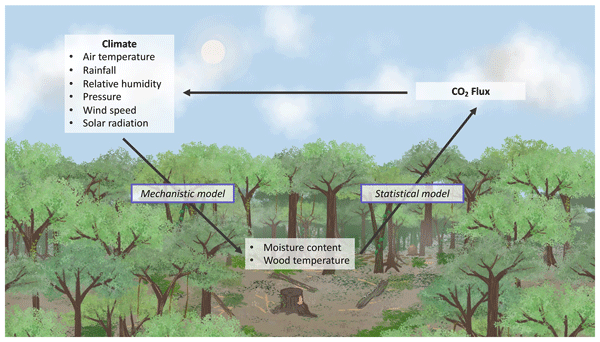
Understanding the link between climate and carbon fluxes is crucial for predicting how climate change will impact carbon sinks. We estimated carbon dioxide (CO2) fluxes from deadwood in tropical Australia using wood moisture content and temperature. Our model predicted that the majority of deadwood carbon is released as CO2, except when termite activity is detected. Future models should also incorporate wood traits, like species and chemical composition, to better predict fluxes.
Cited articles
Adamescu, G. S., Plumptre, A. J., Abernethy, K. A., Polansky, L., Bush, E. R., Chapman, C. A., et al.: Annual cycles are the most common reproductive strategy in African tropical tree communities, Biotropica, 50, 418–430, 2018.
Agostinelli, C. and Lund, U.: R package 'circular': Circular Statistics (version 0.5-0), https://CRAN.R-project.org/package=circular (last access: 1 November 2025), 2023.
Ashton, P. S., Givnish, T. J., and Appanah, S.: Staggered flowering in the Dipterocarpaceae: new insights into floral induction and the evolution of mast fruiting in the aseasonal tropics, Am. Nat., 132, 44–66, 1988.
Boulter, S. L., Kitching, R. L., and Howlett, B.G.: Family, visitors and the weather: patterns of flowering in tropical rain forests of northern Australia, J. Ecol., 94, 369–382, 2006.
Brooks, M. E., Kristensen, K., van Benthem, K. J., Magnusson, A., Berg, C., Nielsen, A., Skaug, H. J., Maechler, M., and Bolker, B. M.: glmmTMB Balances Speed and Flexibility Among Packages for Zero-inflated Generalized Linear Mixed Modeling, R J., 9, 378–400, https://doi.org/10.32614/RJ-2017-066, 2017.
Bruelheide, H., Dengler, J., Purschke, O., Lenoir, J., Jiménez-Alfaro, B., Hennekens, S. M., et al.: Global trait–environment relationships of plant communities, Nature Ecology & Evolution, 2, 1906–1917, 2018.
Bucher, S. F. and Römermann, C.: Flowering patterns change along elevational gradients and relate to life-history strategies in 29 herbaceous species, Alpine Bot., 130, 41–58, 2020.
Bucher, S. F., König, P., Menzel, A., Migliavacca, M., Ewald, J., and Römermann, C.: Traits and climate are associated with first flowering day in herbaceous species along elevational gradients, Ecol. Evol., 8, 1147–1158, 2018.
Burrows, M. A., Heijnis, H., Gadd, P., and Haberle, S. G.: A new late Quaternary palaeohydrological record from the humid tropics of northeastern Australia, Palaeogeogr. Palaeocl., 451, 164–182, 2016.
Bush, E. R., Abernethy, K. A., Jeffery, K., Tutin, C., White, L., Dimoto, E., Dikangadissi, J.-T., Jump, A. S., and Bunnefeld, N.: Fourier analysis to detect phenological cycles using long‐term tropical field data and simulations. Methods in Ecology and Evolution, 8(5), 530-540, 2017.
Cai, Z., Jönsson, P., Jin, H., and Eklundh, L.: Performance of smoothing methods for reconstructing NDVI time-series and estimating vegetation phenology from MODIS data, Remote Sensing, 9, 1271, https://doi.org/10.3390/rs9121271, 2017.
Cardoso, F. C. G., Zwiener, V. P., and Marques, M. C. M.: Tree phenology along a successional gradient of tropical Atlantic Forest, J. Plant Ecol., 12, 272–280, 2019.
Castiglione, S., Serio, C., Piccolo, M., Mondanaro, A., Melchionna, M., Di Febbraro, M., Sansalone, G., Wroe, S., and Raia, P.: The influence of domestication, insularity and sociality on the tempo and mode of brain size evolution in mammals, Biol. J. Linn. Soc., 132, 221–231, https://doi.org/10.1093/biolinnean/blaa186, 2020.
Chapman, C. A., Wrangham, R. W., Chapman, L. J., Kennard, D. K., and Zanne, A. E.: Fruit and flower phenology at two sites in Kibale National Park, Uganda, J. Trop. Ecol., 15, 189–211, 1999.
Chapman, C. A., Valenta, K., Bonnell, T. R., Brown, K. A., and Chapman, L. J.: Solar radiation and ENSO predict fruiting phenology patterns in a 15-year record from Kibale National Park, Uganda, Biotropica, 50, 384–395, https://doi.org/10.1111/btp.12559, 2018.
Chen, S. C., Cornwell, W. K., Zhang, H. X., and Moles, A. T.: Plants show more flesh in the tropics: variation in fruit type along latitudinal and climatic gradients, Ecography, 40, 531–538, https://doi.org/10.1111/ecog.02010, 2017.
Chen, Y.-Y., Satake, A., Sun, I.-F., Kosugi, Y., Tani, M., Numata, S., Hubbell, S.P., Fletcher, C., Supardi, M.N.N. and Wright, S.J.: Species‐specific flowering cues among general flowering Shorea species at the Pasoh Research Forest, Malaysia, J. Ecol., 106, 586–598, 2018.
Craine, J. M., Wolkovich, E. M., and Towne, E. G.: The roles of shifting and filtering in generating community-level flowering phenology, Ecography, 35, 1033–1038, https://doi.org/10.1111/j.1600-0587.2012.07625.x, 2012.
Cortés-Flores, J., Cornejo-Tenorio, G., Urrea-Galeano, L. A., Andresen, E., González-Rodríguez, A., and Ibarra-Manriquez, G.: Phylogeny, fruit traits, and ecological correlates of fruiting phenology in a Neotropical dry forest, Oecologia, 189, 159–169, 2019.
Curran, L. M. and Webb, C. O.: Experimental tests of the spatiotemporal scale of seed predation in mast-fruiting Dipterocarpaceae, Ecol. Monogr., 70, 129–148, https://doi.org/10.2307/2657170, 2000.
Datta, A., Banerjee, S., Naniwadekar, R., Thapa, K., Rathore, A., Thapa, K., Brah, T., Nabum, T., Mogar, N., Shukla, U., Sidhu, S., and Borawake, N.: Patterns of Leaf, Flower, and Fruit Phenology and Environmental Relationships in a Seasonal Tropical Forest in the Indian Eastern Himalaya, Biotropica, 57, e70030, https://doi.org/10.1111/btp.70030, 2025.
De Jong, T. J., Klinkhamer, P. G. L., and Van Staalduinen, M. J.: The consequences of pollination biology for selection of mass or extended blooming, Funct. Ecol., 6, 606–615, https://doi.org/10.2307/2390059, 1992.
Delage, F. P. and Power, S. B.: The impact of global warming and the El Niño-Southern Oscillation on seasonal precipitation extremes in Australia, Clim. Dyn., 54, 4367–4377, 2020.
Doust, S. J.: Seed removal and predation as factors affecting seed availability of tree species in degraded habitats and restoration plantings in rainforest areas of Queensland, Australia, Restor. Ecol., 19, 617–626, 2011.
Edwards, W., Liddell, M. J., Franks, P., Nichols, C., and Laurance, S. G. W.: Seasonal patterns in rainforest litterfall: detecting endogenous and environmental influences from long-term sampling, Austral. Ecol., 43, 225–235, https://doi.org/10.1111/aec.12559, 2018.
Eiserhardt, W. L., Couvreur, T. L. P., and Baker, W. J.: Plant phylogeny as a window on the evolution of hyperdiversity in the tropical rainforest biome, New Phytol., 214, 1408–1422, https://doi.org/10.1111/nph.14516, 2017.
Engert, J. E., Vogado, N. O., Freebody, K., Byrne, B., Murphy, J., Sheather, G., and Laurance, S. G.: Functional trait representation differs between restoration plantings and mature tropical rainforest, For. Ecol. Manage., 473, 118304, https://doi.org/10.1016/j.foreco.2020.118304, 2020.
Engert, J. E., Middleby, K., Vogado, N., and Laurance, S. G.: Seed collection practices in tropical rainforest restoration and implications for provenance research, For. Ecol. Manage., 602, 123376, https://doi.org/10.1016/j.foreco.2025.123376, 2026.
Falster, D., Gallagher, R., Wenk, E. H., Wright, I. J., Indiarto, D., Andrew, S. C., et al.: AusTraits, a curated plant trait database for the Australian flora, Sci. Data, 8, 254, https://doi.org/10.1038/s41597-021-01006-6, 2021.
Forrest, J. R.: Plant–pollinator interactions and phenological change: what can we learn about climate impacts from experiments and observations?, Oikos, 124, 4–13, https://doi.org/10.1111/oik.01386, 2015.
Fox, J. and Weisberg, S.: An R Companion to Applied Regression, third edn., Sage, Thousand Oaks, CA, 2019.
Fritz, S. A. and Purvis, A.: Selectivity in mammalian extinction risk and threat types: a new measure of phylogenetic signal strength in binary traits. Conserv. Biol., 24, 1042–1051, 2010.
Griz, L. M. S. and Machado, I. C. S.: Fruiting phenology and seed dispersal syndromes in caatinga, a tropical dry forest in northeastern Brazil, J. Trop. Ecol., 17, 303–321, https://doi.org/10.1017/S0266467401001201, 2001.
Gross, C. L.: A comparison of the sexual systems in the trees from the Australian tropics with other tropical biomes – more monoecy but why?, Am. J. Bot., 92, 907–919, https://doi.org/10.3732/ajb.92.6.907, 2005.
Haberle, S. G.: A 23,000-yr pollen record from Lake Euramoo, wet tropics of NE Queensland, Australia, Quat. Res., 64, 343–356, https://doi.org/10.1016/j.yqres.2005.08.013, 2005.
Hartig, F.: DHARMa: Residual Diagnostics for Hierarchical (Multi-Level/Mixed) Regression Models, R package version 0.4.6, https://CRAN.R-project.org/package=DHARMa (last access: 5 November 2025), 2022.
Hopkins, M. and Graham, A. W.: The viability of seeds of rainforest species after experimental soil burials under tropical wet lowland forest in north‐eastern Australia, Australian J. Ecol., 12, 97–108, 1987.
Hughes, L.: Climate change and Australia: trends, projections and impacts, Austral. Ecol., 28, 423–443, 2003.
IPCC: Climate Change 2021: The Physical Science Basis, Contribution of Working Group I to the Sixth Assessment Report of the Intergovernmental Panel on Climate Change, Cambridge Univ. Press, Cambridge, https://doi.org/10.1017/9781009157896, 2021.
Janzen, D. H.: Synchronization of sexual reproduction of trees within the dry season in Central America, Evolution, 21, 620–637, https://doi.org/10.2307/2406621, 1967.
Janzen, D. H.: Tropical blackwater rivers, animals, and mast fruiting by the Dipterocarpaceae, Biotropica, 6, 69–103, https://doi.org/10.2307/2989823, 1974.
Jin, Y. and Qian, H. V.: PhyloMaker: an R package that can generate very large phylogenies for vascular plants, Ecography, 42, 1353–1359, 2019.
Jordano, P.: Angiosperm fleshy fruits and seed dispersers: a comparative analysis of adaptation and constraints in plant–animal interactions, Am. Nat., 145, 163–191, https://doi.org/10.1086/285735, 1995.
Kang, H. and Bawa, K.S.: Effects of successional status, habit, sexual systems, and pollinators on flowering patterns in tropical rain forest trees, Am. J. Bot., 90, 865–876, https://doi.org/10.3732/ajb.90.6.865, 2003.
Kamino, L. H. Y., Rezende, É. A., Santos, L. J. C., Felippe, M. F., and Assis, W. L.: Atlantic Tropical Brazil. In: Salgado, A., Santos, L., Paisani, J. (Eds.): The Physical Geography of Brazil, in: Geography of the Physical Environment, Springer, Cham, https://doi.org/10.1007/978-3-030-04333-9_4, 2019.
Kelly, D. and Sork, V. L.: Mast seeding in perennial plants: why, how, where?, Annu. Rev. Ecol. Syst., 33, 427–447, https://doi.org/10.1146/annurev.ecolsys.33.020602.095433, 2002.
Kelly, D.: The evolutionary ecology of mast seeding, Trends Ecol. Evol., 9, 465–470, https://doi.org/10.1016/0169-5347(94)90310-7, 1994.
Kershaw, A. P., Bretherton, S. C., and van der Kaars, S.: A complete pollen record of the last 230 ka from Lynch's Crater, north-eastern Australia, Palaeogeogr. Palaeocl., 251, 23–45, https://doi.org/10.1016/j.palaeo.2007.02.015, 2007.
König, P., Tautenhahn, S., Cornelissen, J. H. C., Kattge, J., Bönisch, G., and Römermann, C.: Advances in flowering phenology across the Northern Hemisphere are explained by functional traits, Glob. Ecol. Biogeogr., 27, 310–321, https://doi.org/10.1111/geb.12696, 2018.
Kurten, E. L., Bunyavejchewin, S., and Davies, S. J.: Phenology of a dipterocarp forest with seasonal drought: Insights into the origin of general flowering, J. Ecol., 106, 126–136, https://doi.org/10.1111/1365-2745.12858, 2018.
Liu, N., Garcia, M., Singh, A., Clare, J. D. J., Stenglein, J. L., Zuckerberg, B., Kruger, E. L., and Townsend, P. A.: Trail camera networks provide insights into satellite-derived phenology for ecological studies, Int. J. Appl. Earth Obs. Geoinf., 97, 102291, https://doi.org/10.1016/j.jag.2020.102291, 2021.
McGillycuddy, M., Warton, D. I., Popovic, G., and Bolker, B. M.: Parsimoniously Fitting Large Multivariate Random Effects in glmmTMB, arXiv [preprint], https://doi.org/10.48550/arXiv.2411.04411, 2024.
Mendoza, I., Peres, C. A., and Morellato, L. P. C.: Continental-scale patterns and climatic drivers of fruiting phenology: A quantitative Neotropical review, Global Planet. Change, 148, 227–241, https://doi.org/10.1016/j.gloplacha.2016.12.001, 2017.
Mendoza, I., Condit, R. S., Wright, S. J., Caubère, A., Châtelet, P., Hardy, I., and Forget, P.-M.: Inter-annual variability of fruit timing and quantity at Nouragues (French Guiana): insights from hierarchical Bayesian analyses, Biotropica, 50, 431–441, https://doi.org/10.1111/btp.12560, 2018.
Metcalfe, D. J. and Ford, A. J.: Floristics and plant biodiversity of the rainforests of the Wet Tropics, in: Living in a Dynamic Tropical Forest Landscape, 123–132, https://doi.org/10.1002/9781444300321.ch9, 2008.
Migliavacca, M., Musavi, T., Mahecha, M. D., Nelson, J. A., Knauer, J., Baldocchi, D. D., et al.: The three major axes of terrestrial ecosystem function, Nature, 598, 468–472, 2021.
Momose, K., Ishii, R., Sakai, S., and Inoue, T.: Plant reproductive intervals and pollinators in the aseasonal tropics: a new model, P. Roy. Soc. Lond. B Bio., 265, 2333–2339, https://doi.org/10.1098/rspb.1998.0580, 1998.
Morellato, L. P. C., Alberti, L., and Hudson, I. L.: Applications of Circular Statistics in Plant Phenology: A Case Studies Approach”, in: Phenological Research, edited by: Hudson, I. an Keatley, M., Springer, 339–359, https://doi.org/10.1007/978-90-481-3335-2_16, 2010.
Morellato, P. C. and Leitão-Filho, H. F.: Reproductive phenology of climbers in a southeastern Brazilian forest, Biotropica, 28, 180–191, https://doi.org/10.2307/2389073, 1996.
Morellato, L. P. C., Talora, D. C., Takahasi, A., Bencke, C. C., Romera, E. C., and Zipparro, V. B.: Phenology of Atlantic Rain Forest Trees: A Comparative Study1, Biotropica, 32, 811–823. https://doi.org/10.1111/j.1744-7429.2000.tb00620.x, 2000.
Newstrom, L. E., Frankie, G. W., and Baker, H. G.: A new classification for plant phenology based on flowering patterns in lowland tropical rain forest trees at La Selva, Costa Rica, Biotropica, 26, 141–159, https://doi.org/10.2307/2388804, 1994.
Norden, N., Chave, J., Belbenoit, P., Caubere, A., Chatelet, P., Forget, P. M., and Thebaud, C.: Mast fruiting is a frequent strategy in woody species of eastern South America, PLoS ONE, 2, e1079, https://doi.org/10.1371/journal.pone.0001079, 2007.
Numata, S., Yamaguchi, K., Shimizu, M., Sakurai, G., Morimoto, A., Alias, N., and Satake, A.: Impacts of climate change on reproductive phenology in tropical rainforests of Southeast Asia, Commun. Biol., 5, 311, https://doi.org/10.1038/s42003-022-03245-8, 2022.
Numata, S., Yasuda, M., Suzuki, R. O., Hosaka, T., Supardi, N. M. N., Fletcher, C. D., and Hashim, M.: Geographical pattern and environmental correlates of regional-scale general flowering in Peninsular Malaysia, PLoS ONE, 8, e79095, https://doi.org/10.1371/journal.pone.0079095, 2013.
Osunkoya, O. O.: Postdispersal survivorship of north Queensland rainforest seeds and fruits: effects of forest, habitat and species, Australian J. Ecol., 19, 52–64, 1994.
Pabon-Moreno, D. E., Musavi, T., Migliavacca, M., Reichstein, M., Römermann, C., and Mahecha, M. D.: Ecosystem physio-phenology revealed using circular statistics, Biogeosciences, 17, 3991–4006, https://doi.org/10.5194/bg-17-3991-2020, 2020.
Pau, S., Wolkovich, E. M., Cook, B. I., Nytch, C. J., Regetz, J., Zimmerman, J. K., and Wright, S. J.: Clouds and temperature drive dynamic changes in tropical flower production, Nat. Clim. Change, 3, 838–842, https://doi.org/10.1038/nclimate1934, 2013.
Pérez-Ramos, I. M., Cambrollé, J., Hidalgo-Galvez, M. D., Matías, L., Montero-Ramírez, A., Santolaya, S., and Godoy, Ó.: Phenological responses to climate change in communities of plants species with contrasting functional strategies, Environ. Exp. Bot., 170, 103852, https://doi.org/10.1016/j.envexpbot.2019.103852, 2020.
Polansky, L. and Robbins, M. M.: Generalized additive mixed models for disentangling long-term trends, local anomalies, and seasonality in fruit tree phenology, Ecol. Evol., 3, 3141–3151, 2013.
Rother, D. C., de Sousa, I. L., Gressler, E., Liboni, A. P., Souza, V. C., Rodrigues, R. R., and Morellato, L. P. C.: Comparing the potential reproductive phenology between restored areas and native tropical forest fragments in southeastern Brazil, Restor. Ecol., 30, e13529, https://doi.org/10.1111/rec.13529, 2022.
Sakai, S., Momose, K., Yumoto, T., Nagamitsu, T., Nagamasu, H., Hamid, A. A., and Nakashizuka, T.: Plant reproductive phenology over four years including an episode of general flowering in a lowland dipterocarp forest, Sarawak, Malaysia, Am. J. Bot., 86, 1414–1436, 1999.
Sakai, S.: Phenological diversity in tropical forests, Popul. Ecol., 43, 77–86, https://doi.org/10.1007/PL00012018, 2001.
Schemske, D. W.: Floral convergence and pollinator sharing in two bee-pollinated tropical herbs, Ecology, 62, 946–954, https://doi.org/10.2307/1936993, 1981.
Segrestin, J., Navas, M. L., and Garnier, E.: Reproductive phenology as a dimension of the phenotypic space in 139 plant species from the Mediterranean, New Phytol., 225, 740–753, https://doi.org/10.1111/nph.16165, 2020.
Simpson, G.: gratia: Graceful ggplot-based graphics and other functions for GAMs fitted using mgcv, R package version 0.9.2, https://gavinsimpson.github.io/gratia/ (last access: 1 November 2025), 2024.
Smith, S. A. and Brown, J. W.: Constructing a broadly inclusive seed plant phylogeny, Am. J. Bot., 105, 302–314, 2018.
Staal, A., Fetzer, I., Wang-Erlandsson, L., Bosmans, J. H., Dekker, S. C., van Nes, E. H., and Tuinenburg, O. A.: Hysteresis of tropical forests in the 21st century, Nat. Commun., 11, 4978, https://doi.org/10.1038/s41467-020-18728-7, 2020.
Sun, S. and Frelich, L. E.: Flowering phenology and height growth pattern are associated with maximum plant height, relative growth rate and stem tissue mass density in herbaceous grassland species, J. Ecol., 99, 991–1000, https://doi.org/10.1111/j.1365-2745.2011.01830.x, 2011.
Talora, D. C. and Morellato, L. P. C.: Fenologia de espécies arbóreas em floresta de planície litorânea do sudeste do Brasil, Rev. Bras. Bot., 23, 13–26, https://doi.org/10.1590/S0100-84042000000100002, 2000.
Tracey, J. G.: The vegetation of the humid tropical region of North Queensland, CSIRO, Melbourne, 124 pp., https://doi.org/10.2307/2259757, 1982.
Turney, C. S., Kershaw, A. P., James, S., Branch, N., Cowley, J., Fifield, L. K., and Moss, P.: Geochemical changes recorded in Lynch's Crater, northeastern Australia, over the past 50 ka, Palaeogeogr. Palaeocl., 233, 187–203, https://doi.org/10.1016/j.palaeo.2005.09.009, 2006.
Orme, D., Freckleton, R., Thomas, G., Petzoldt, T., Fritz, S., Isaac, N., and Pearse, W.: caper: Comparative Analyses of Phylogenetics and Evolution in R, R package version 1.0.3, https://CRAN.R-project.org/package=caper (last access: 1 November 2025), 2023.
Valentin-Silva, A., Staggemeier, V. G., Batalha, M. A., and Guimarães, E.: What factors can influence the reproductive phenology of Neotropical Piper species (Piperaceae) in a semi-deciduous seasonal forest?, Botany, 96, 675–684, 2018.
Van Schaik, C. P., Terborgh, J. W., and Wright, S. J.: The phenology of tropical forests: adaptive significance and consequences for primary consumers, Annu. Rev. Ecol. Syst., 24, 353–377, 1993.
Vogado, N. O. and Liddell, M. J.: Climate change effects on long-term leafing activity of a tropical rainforest tree species, Davidsonia pruriens, Austral. Ecol., 50, e70077, https://doi.org/10.1111/aec.70077, 2025.
Vogado, N. O., Liddell, M. G., Laurance, S. G. W., Campbell, M. J., Cheesman, A. W., Engert, J. E., Palma, A. C., Ishida, F. Y., and Cernusak, L. A.: The effects of an experimental drought on the ecophysiology and fruiting phenology of a tropical rainforest palm, J. Plant Ecol., 13, 744–753, https://doi.org/10.1093/jpe/rtaa069, 2020.
Vogado, N. O., Engert, J. E., Linde, T. L., Campbell, M. J., Laurance, W. F., and Liddell, M. J.: Climate change affects reproductive phenology in lianas of Australia's wet tropics, Front. For. Glob. Change, 5, 787950, https://doi.org/10.3389/ffgc.2022.787950, 2022.
Vogado, N. O., Laurance, S. G., Liddell, M. J., Engert, J. E., Wurster, C. M., Schiffer, M., and Cernusak, L. A.: Assessing the effects of a drought experiment on the reproductive phenology and ecophysiology of a wet tropical rainforest community, Conserv. Physiol., 11, coad064, https://doi.org/10.1093/conphys/coad064, 2023.
Vogado, N. O., Engert, J. E., Green, P. T., and Liddell, M. J.: Regional variation in the reproductive phenology of a tropical rainforest tree species, Cardwellia sublimis, J. Plant Ecol., 18, rtaf022, https://doi.org/10.1093/jpe/rtaf022, 2025.
Vogado, N. O., Engert, J., and Liddell, M.: Phenological calendar and predicted fortnight phenological activity of Wet Tropical rainforest community, Zenodo [data set], https://doi.org/10.5281/zenodo.20556417, 2026.
Wang, M., Li, P., Peng, C., Xiao, J., Zhou, X., Luo, Y., and Zhang, C.: Divergent responses of autumn vegetation phenology to climate extremes over northern middle and high latitudes, Glob. Ecol. Biogeogr., 31, 2281–2296, https://doi.org/10.1111/geb.13583, 2022.
Westcott, D. A., Dennis, A. J., Bradford, M. G., Harrington, G. N., and McKeown, A.: Seed dispersal processes in Australia's tropical rainforests, in: Living in a Dynamic Tropical Forest Landscape, 210 pp., https://doi.org/10.1002/9781444300321, 2009.
Williamson, G. B. and Ickes, K.: Mast fruiting and ENSO cycles – does the cue betray a cause?, Oikos, 97, 459–461, 2002.
Williams, K. J., Ford, A., Rosauer, D. F., De Silva, N., Mittermeier, R., Bruce, C., Larsen, F. W., and Margules, C.: Forests of east Australia: the 35th biodiversity hotspot, in: Biodiversity Hotspots: Distribution and Protection of Conservation Priority Areas, edited by: Zachos, F. E. and Habel, J. C., Springer-Verlag, Berlin, Germany, 295–310, https://doi.org/10.1007/978-3-642-20992-5_16, 2011.
Wolkovich, E. M. and Cleland, E. E.: Phenological niches and the future of invaded ecosystems with climate change, AoB plants, 6, plu013, https://doi.org/10.1093/aobpla/plu013, 2014.
Wood, S. N.: Generalized additive models: an introduction with R, Chapman and Hall/CRC, https://doi.org/10.1201/9781315370279, 2017.
Wright, S. J. and Calderón, O.: Solar irradiance as the proximate cue for flowering in a tropical moist forest, Biotropica, 50, 374–383, 2018.
Wright, S. J. and van Schaik, C. P.: Light and the phenology of tropical trees, Am. Nat., 143, 192–199, 1994.
Wright, S. J., Carrasco, C., Calderón, O., and Paton, S.: The El Niño Southern Oscillation, variable fruit production, and famine in a tropical forest, Ecology, 80, 1632–1647, 1999.
Zanne, A. E., Tank, D. C., Cornwell, W. K., Eastman, J. M., Smith, S. A., FitzJohn, R. G., et al.: Three keys to the radiation of angiosperms into freezing environments, Nature, 506, 89–92, 2014.
Zich, F. A., Hyland, B. P. M., Whiffin, T., and Kerrigan, R. A.: Australian Tropical Rainforest Plants, Edition 7, https://www.anbg.gov.au/cpbr/cd-keys/RFK7/key/RFK7/Media/Html/index_rfk.htm (last access: 1 November 2025), 2018.
Zimmerman, J. K., Wright, S. J., Calderón, O., Pagan, M. A., and Paton, S.: Flowering and fruiting phenologies of seasonal and aseasonal neotropical forests: the role of annual changes in irradiance, J. Trop. Ecol., 23, 231–251, 2007.
Download
The requested paper has a corresponding corrigendum published. Please read the corrigendum first before downloading the article.
- Article
(3794 KB) - Full-text XML
- Corrigendum
-
Supplement
(826 KB) - BibTeX
- EndNote
Short summary
Reproductive phenology is an essential component of forest ecology and a valuable metric for assessing the impacts of climate change. We present 15 years of flowering and fruiting observations for Australian tropical rainforest tree species and analyse how reproductive phenology patterns change through time at both the species and community level. We find that reproductive phenology is influenced by plant functional traits, including seed dispersal syndrome.
Reproductive phenology is an essential component of forest ecology and a valuable metric for...


